Abbas araghchi: Iran’s Leadership Turmoil: Under Fire
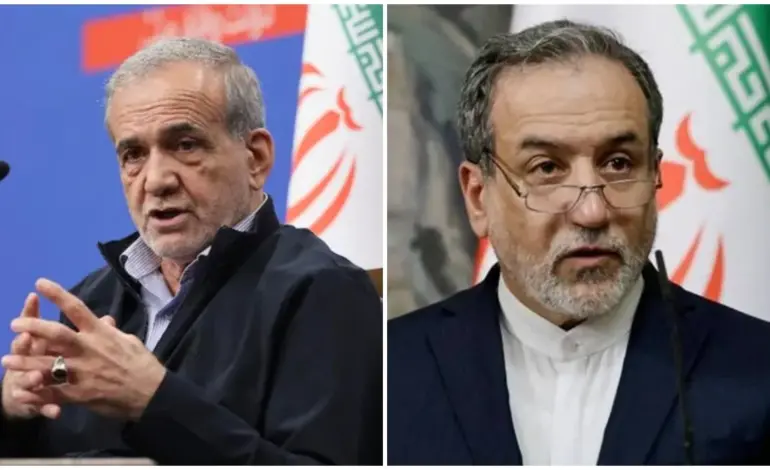
Masoud Pezeshkian has told close associates that he will dismiss Abbas Araghchi if such conduct continues. This statement reflects growing tensions within Iran’s leadership, particularly regarding Araghchi’s handling of negotiations with the United States.
Internal rifts are surfacing, especially as President Pezeshkian and Parliament Speaker Mohammad Bagher Ghalibaf seek Araghchi’s ouster. Accusations against him suggest he aligns too closely with Revolutionary Guard Commander Ahmad Vahidi — a relationship that Pezeshkian believes undermines his role as a cabinet minister.
Araghchi’s direct coordination with Vahidi, without informing the president, has caused significant frustration among top officials. This situation is compounded by Ghalibaf’s recent resignation from the negotiating team after a reprimand for including nuclear discussions in talks.
On April 24, Araghchi traveled alone to Islamabad to deliver Tehran’s proposal to Pakistani officials. However, the United States president rejected this proposal outright, highlighting the divisions within Iran’s leadership regarding negotiations.
A group of lawmakers aligned with hardline politician Saeed Jalili have refused to support the negotiating team, further complicating matters. The Revolutionary Guards are reportedly consolidating power in key managerial positions due to this critical situation.
Amid these tensions, Araghchi maintains that cooperation between Iran and Russia continues to expand. He stated that “the United States failed to achieve its objectives in the recent conflict with Iran,” an assertion that may resonate differently depending on one’s political alignment within Iran.
This turmoil is not unprecedented; divisions within Iran’s leadership have been evident for some time. Previous disagreements surfaced as recently as March 28, indicating a long-standing struggle for control over foreign policy direction.
The meeting between Iranian and Russian officials was described as constructive by Russian Foreign Minister Sergey Lavrov, suggesting that despite internal strife, some diplomatic channels remain active.