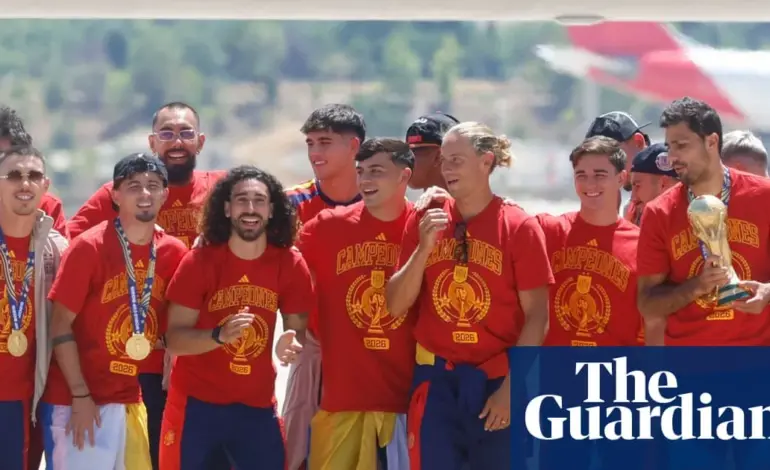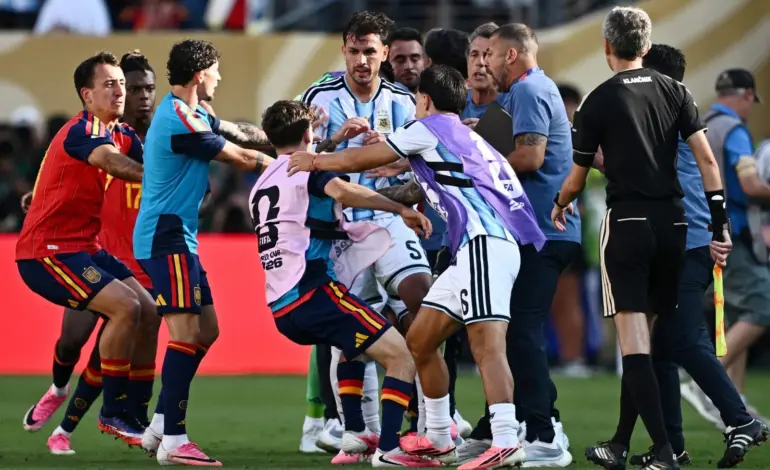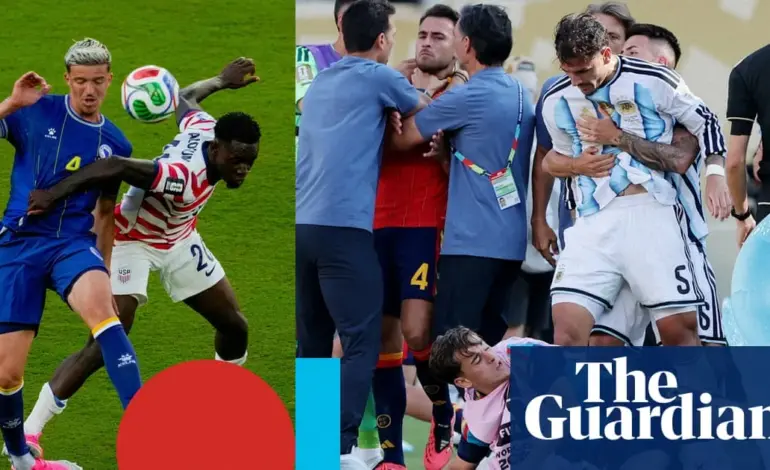
Spain secures World Cup title amidst on-field and off-field events
Spain emerged victorious in the World Cup 2026, defeating France in the semi-finals and then overcoming reigning champions Argentina in the final match. The tournament concluded with Spain captain Rodri lifting the trophy, though the moment was briefly overshadowed by the presence of United States President Donald Trump on stage. FIFA President Gianni Infantino reportedly intervened to allow the Spanish team their celebratory moment.
The event was characterised by a mix of on-field drama and off-field controversies. While some fans celebrated American hospitality, others pointed to issues such as visa denials and the treatment of the Iranian team. The tournament also saw surprising performances from teams like Cape Verde and Norway, who reached the quarter-finals, alongside the expected presence of the top four FIFA-ranked teams in the semi-finals.
The competition showcased football’s capacity to unite, with fans of losing teams continuing to celebrate the game. However, it also highlighted divisions, including instances of abuse and Islamophobic chants directed at some Iranian fans by anti-government activists. Arbitrary travel restrictions were also placed on the Iranian team by the US hosts.

Contradictions and commercialisation
The World Cup, intended to be apolitical, became a platform for political discussions, with President Trump reportedly taking a central role. He acknowledged making a call to FIFA officials regarding the suspension of USA striker Florian Balogun, though Team America subsequently experienced a 4-1 loss to Belgium in their next match. The tournament also saw fans displaying both Palestinian and Israeli flags.
The event introduced new elements to the sport, reflecting an American influence. These included mid-half hydration breaks used for commercials, championship rings, and half-time shows. For many, this represented an effort to Americanise the game. The accessibility of football, often cited as a key to its global appeal, was challenged by high ticket prices, which ranged from hundreds to hundreds of thousands of dollars. This made attendance difficult for working-class fans.
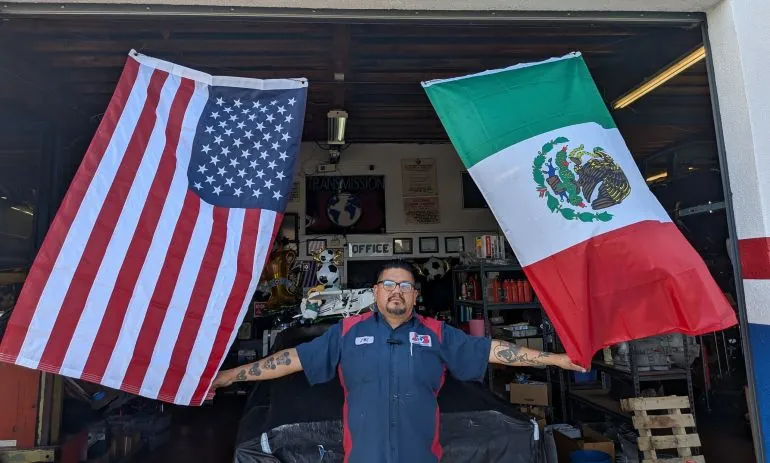
Juan Cortes, a mechanic in the Los Angeles area, expressed his desire to attend matches, noting the proximity of the Los Angeles Stadium to his shop despite being unable to afford tickets. The perceived distance between the event and local fans was also evident in the final, which was held at the New York New Jersey stadium. Despite the city’s skyline being visible, the stadium’s suburban location, surrounded by car parks and motorways, made it difficult to access for city dwellers.
Impact on fans and future tournaments
The tournament’s organisation and the treatment of various stakeholders also drew criticism. The Balogun affair, involving a player’s participation despite a suspension, raised questions about political pressure influencing sporting decisions. This incident, along with the treatment of Iran, was seen by some as setting a concerning precedent. There are suggestions that future World Cup ticket prices may be lower, but the idea of making a significant proportion of tickets available to regular fans may be diminishing, transforming the event into a luxury experience.
Host cities in the US and Canada reportedly saw street sweeps of homeless individuals, with some losing their possessions. In Mexico, concerns were raised about water extraction and environmental damage linked to World Cup projects. Media outlets also faced challenges, with one Italian newspaper reporting a reduction in its ticket allocation for the final after publishing critical commentary about the tournament.
Despite these issues, the World Cup delivered memorable football moments, including dramatic matches and individual heroic performances. While some quarter-finals were not particularly inspiring, Argentina’s semi-final victory over England was thrilling. Spain’s win over France was described as a display of clear superiority. The final match, however, was considered by some to be a dismal affair, with the right team winning in a familiar manner.
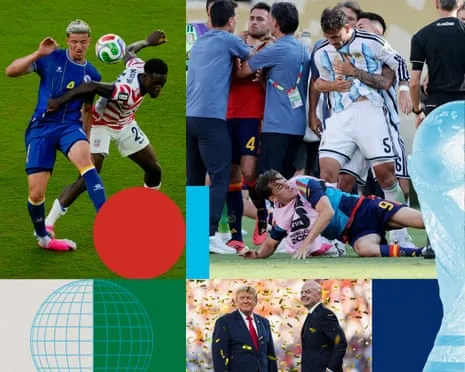
The World Cup 2026, with its blend of spectacle, controversy, and compromise, will be remembered for its contradictions and inconsistencies.
Source: aljazeera.com