Noida Protests Bring City to a Standstill Amid Rising Costs
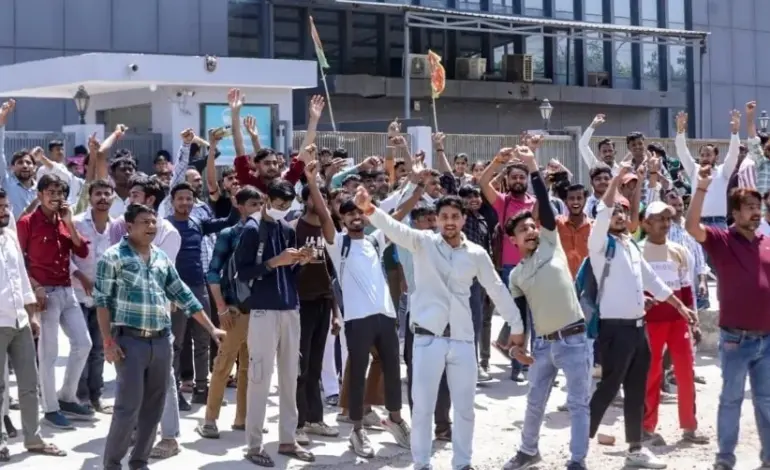
In a significant development, Noida has been rocked by protests that began on April 9, 2026, as workers took to the streets demanding action against rising living costs and stagnant wages. The protests escalated, leading to a near six-hour standstill of traffic across key corridors in the city, including the Delhi-Noida Link Road and the DND flyway.
The immediate impact was felt by commuters, with reports indicating that long tailbacks stretched several kilometres. Ankit Sharma, a frustrated commuter, shared, “It took me nearly two and a half hours to reach from Indirapuram to Okhla. Usually, it’s a 45-minute drive.” The Delhi Traffic Police issued its first advisory at 11:48 am, but many were already caught in the chaos by that time.
The protests, which were sparked by workers staging sit-ins, have drawn attention to the broader issue of economic hardship faced by many in the region. The situation was exacerbated by the Local Intelligence Unit of the Noida Police, which failed to provide timely intelligence, resulting in a breakdown of law and order. By the end of the protests, around 80 factories in Greater Noida and Noida had reported vandalism, further complicating the situation.
As the protests unfolded, Uttar Pradesh Labour Minister Anil Rajbhar suggested that the unrest might be part of a “larger conspiracy,” even hinting at a “possible Pakistan link” to the protests. He stated, “Forces troubled by the growing popularity of the double-engine government are conspiring to create instability.” This assertion has raised eyebrows and left many questioning the motivations behind the protests.
The disruption not only affected traffic but also had a significant impact on school operations in both Delhi and Noida, as parents struggled to navigate the congested roads. Neha Gupta, another commuter, lamented, “There was no proper advisory in the morning. By the time we realised what was happening, we were already stuck in the middle of it.” The situation began to ease by mid-afternoon, with traffic normalizing approximately 1.5 hours after the protests ended.
Officials from the Noida Police claimed that adequate police deployment had been ensured after earlier disruptions, but the effectiveness of these measures remains in question. Details remain unconfirmed regarding the exact nature of the ‘larger conspiracy’ mentioned by Rajbhar, and the overall effectiveness of police and administrative responses to the protests is still under scrutiny.
As the dust settles on this significant event, the protests in Noida serve as a stark reminder of the growing discontent among workers facing economic challenges. The reactions from officials and the public highlight the complexities of managing civil unrest in a rapidly changing economic landscape. With the situation still unfolding, many are left wondering how the government will respond to the underlying issues that sparked this unrest.