Artemis 2 launch time: Countdown to Artemis II Launch Time: A Historic Return to the Moon
Reaction from the field
The upcoming Artemis II launch, scheduled for April 1, 2026, represents a pivotal moment in space exploration, marking the first crewed spacecraft to embark on a lunar trajectory in over half a century. This mission not only aims to circle the Moon but also carries profound implications for future lunar exploration and international collaboration in space.
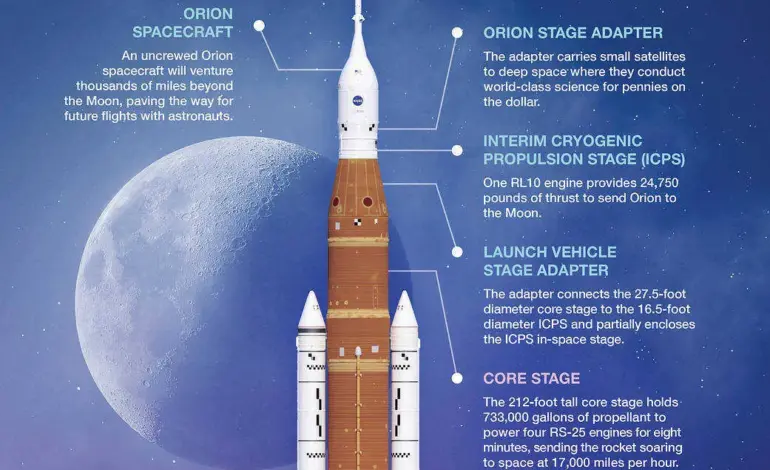
NASA has announced that the Artemis II mission will feature a four-member international crew, including Reid Wiseman, Victor Glover, Christina Koch, and Jeremy Hansen. Notably, this mission will carry the first woman and the first person of color to embark on a lunar trajectory, a significant milestone in the history of space travel. The crew’s journey will last approximately ten days, showcasing the capabilities of NASA’s Space Launch System (SLS) rocket, which stands at an impressive 32 stories tall.
The mission’s primary objective is to execute a high-velocity mission around the Moon, rather than a lunar landing. This approach allows NASA to test critical systems and gather data that will inform future missions, including the anticipated lunar landings planned under the Artemis program. The countdown for the launch officially commenced on March 30, 2026, with NASA teams already engaged in preparations, including the liquid oxygen topping process for the interim cryogenic propulsion stage.
As the launch date approaches, NASA’s commitment to transparency is evident, with plans for extensive broadcast coverage available on platforms such as NASA+, Amazon Prime, and YouTube. This accessibility aims to engage the public and inspire a new generation of space enthusiasts and scientists. The excitement surrounding the Artemis II mission is palpable, as it signifies not only a return to lunar exploration but also the potential for future missions to Mars and beyond.
Moreover, the Artemis II mission serves as a testament to international cooperation in space exploration. The inclusion of Jeremy Hansen, a Canadian astronaut, highlights the collaborative efforts between NASA and its international partners. This mission is a stepping stone towards a more united approach to exploring the cosmos, fostering relationships that could lead to even more ambitious projects in the future.
Details remain unconfirmed regarding the exact timing of the launch on April 1, 2026, but the anticipation is building as teams work diligently to ensure a successful liftoff. The Artemis II mission not only aims to push the boundaries of human exploration but also to inspire a sense of wonder and curiosity about the universe.
As we look forward to this historic event, the implications of the Artemis II mission extend far beyond the immediate goals of lunar exploration. It represents a renewed commitment to human spaceflight and the pursuit of knowledge, setting the stage for future generations to explore the final frontier.