NASA Artemis II: A Historic Step Towards Lunar Exploration
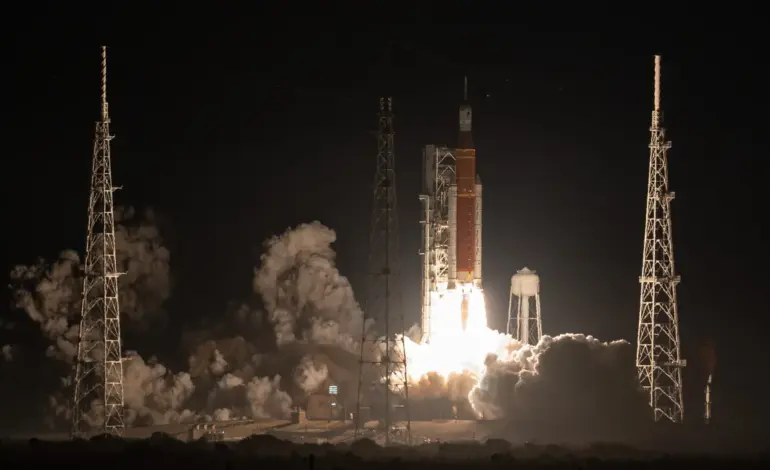
The upcoming NASA Artemis II mission, scheduled for April 1, 2026, represents a pivotal moment in human space exploration as it will be the first crewed mission of NASA’s Artemis program. This mission is not just a return to the Moon; it symbolizes a renewed commitment to lunar exploration after a hiatus of 50 years since Apollo 17.
Artemis II will carry four astronauts—Reid Wiseman, Victor Glover, Christina Koch, and Jeremy Hansen—on a 10-day journey that includes a lunar flyby. This mission is particularly historic as it will feature the first woman, a person of color, and a non-American astronaut traveling to the Moon.
The mission will utilize NASA’s Space Launch System (SLS) rocket and the Orion spacecraft, which are designed to withstand the rigors of deep space travel. However, the mission is not without its challenges. NASA has faced delays and rising costs, relying on private companies for various components, which raises questions about the program’s sustainability.
NASA emphasizes that precision and risk management are essential, especially given the agency’s history of spaceflight tragedies. The Artemis II mission carries inherent risks, including untested life support systems and potential exposure to solar radiation during the journey.
As the crew prepares for this ambitious mission, they will need to navigate the complexities of re-entry, which will occur at speeds of up to 40,000 kilometers per hour. The only protection between them and the extreme heat of re-entry is a heat shield designed to absorb and dissipate that heat.
Moreover, the mission aims to recreate the sense of global unity sparked by Apollo 8, which orbited the Moon in 1968. This aspiration underscores NASA’s intent to foster international collaboration in space exploration, particularly with partners like the Canadian Space Agency.
Despite the excitement surrounding Artemis II, uncertainties loom large. The launch date is not guaranteed due to potential technical issues, and the effectiveness of the untested life support system during the mission remains uncertain. Additionally, the impact of increased solar activity on the mission is unclear, adding another layer of complexity to this ambitious endeavor.
As preparations continue at Kennedy Space Center in Florida, the world watches closely, eager to witness this historic step towards a new era of lunar exploration. Details remain unconfirmed, but the stakes are undeniably high as NASA aims to push the boundaries of human spaceflight once again.