Pearl harbor: Donald Trump’s Comparison: A Provocative Moment
Before Donald Trump’s recent comments, the historical significance of Pearl Harbor was largely viewed through the lens of its impact on World War II, where the surprise attack on December 7, 1941, led to over 2,400 American casualties and ultimately propelled the United States into the global conflict. The attack has been a symbol of unexpected military aggression, representing a pivotal moment in American history.
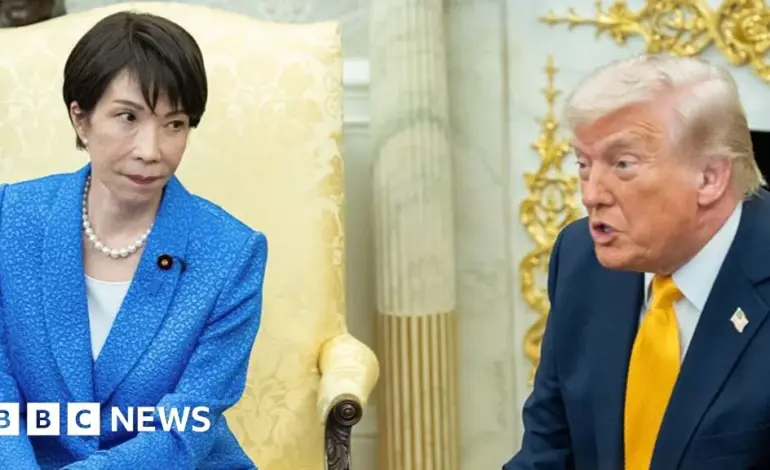
However, during a meeting with Japan’s first female prime minister, Sanae Takaichi, Trump drew a controversial parallel between the Pearl Harbor attack and recent US military strikes on Iran. He stated, “Why didn’t you tell me about Pearl Harbor?” and followed up with, “Who knows better about surprise than Japan?” This remark came in response to a question regarding the lack of communication with allies, highlighting a shift in the narrative surrounding military strategy and alliances.
The immediate reaction to Trump’s comments was mixed, with Takaichi’s response going viral on social media. Trump’s praise for her command of English added a layer of complexity to the interaction, as it underscored the diplomatic nuances at play. The juxtaposition of a historical tragedy with contemporary military actions raises questions about the appropriateness of such comparisons.
Experts have weighed in on this provocative analogy, suggesting that while historical references can provide context, they can also trivialize the gravity of past events. The Pearl Harbor attack not only marked a significant loss of life but also catalyzed a national response that shaped the course of history. Trump’s comments, therefore, invite scrutiny regarding their implications for current international relations.
Moreover, the historical context of Pearl Harbor serves as a reminder of the consequences of surprise attacks and the importance of communication among allies. The US entered World War II in the wake of the Pearl Harbor attack, a decision that had far-reaching effects on global politics.
As discussions surrounding Trump’s remarks continue, it is essential to consider the historical weight of events like Pearl Harbor and how they resonate in today’s geopolitical climate. The blending of past and present in political discourse can illuminate patterns but also risks oversimplifying complex issues.
In this light, Trump’s comments serve as a reminder of the delicate balance between historical reflection and contemporary military strategy. The interplay of these narratives shapes public perception and policy decisions, underscoring the importance of thoughtful dialogue in international affairs.
Details remain unconfirmed regarding the broader implications of Trump’s remarks on US-Iran relations and the future of diplomatic engagements with Japan.