Eclipse 2026: A Celestial Event You Won’t Want to Miss
Introduction to Eclipse 2026
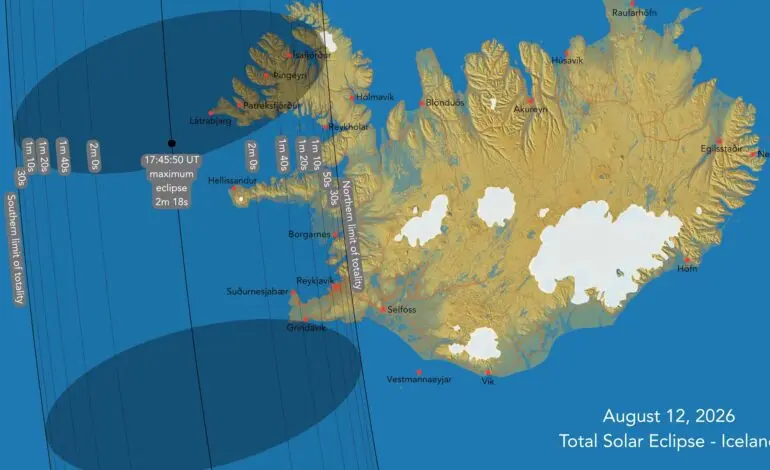
The upcoming eclipse in 2026 is poised to be a spectacular astronomical event. Scheduled for August 12, 2026, it is a total solar eclipse that will be visible across parts of the Arctic, Greenland, Iceland, Spain, and Portugal. Such eclipses are rare occasions that not only stimulate scientific curiosity but also attract enthusiasts and tourists eager to witness celestial phenomena. Understanding the path and impact of this eclipse is essential for sky gazers and the general public alike.
Details of the Eclipse
The total eclipse will occur when the moon completely covers the sun, resulting in a brief period of darkness during daylight hours. The complete path of totality will allow viewers in specific regions to experience a few minutes of total obscuration, while those outside this path will see a partial eclipse. The eclipse will start in the Arctic and move across parts of Greenland and Iceland before making landfall in Spain and Portugal. In key cities like Madrid and Lisbon, residents and visitors should expect to see a significant portion of the sun covered during the peak of the eclipse.
Events and Activities Surrounding the Eclipse
As more people prepare for this celestial event, many countries including Spain and Portugal are planning special events and activities for both locals and tourists. Public viewings, educational sessions about astronomy, and guided tours to prime observation spots are some initiatives underway. Furthermore, various astronomy clubs and organizations are gearing up to host gatherings, where experts will share insights about eclipses and related phenomena.
Conclusion and Significance
The eclipse of 2026 is anticipated to generate immense interest, not just for its visual spectacle but also for the community and scientific discussions it will inspire. With proper preparation and awareness, viewers can maximize their experience of this rare celestial event. As we look to August 2026, astronomers expect it to resonate significance among those passionate about the wonders of our universe, highlighting the importance of astronomical events in fostering a deeper appreciation for science and nature among people worldwide.