The Enduring Legacy of Abraham Lincoln in American History
Introduction
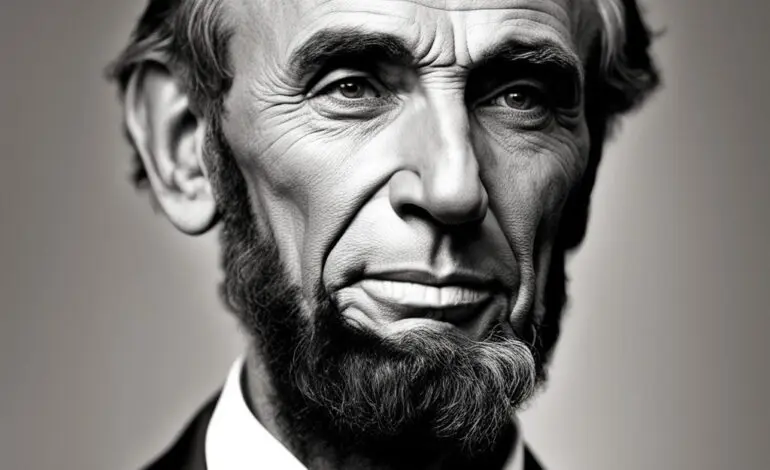
Abraham Lincoln, the 16th President of the United States, is a pivotal figure in American history. His leadership during the Civil War, commitment to abolishing slavery, and efforts to unify a fractured nation have solidified his place in the annals of history. Lincoln’s life and legacy continue to resonate today, making it crucial to examine his contributions and the lessons they impart for modern society.
Key Events and Contributions
Lincoln was born on February 12, 1809, in Hardin County, Kentucky, and grew up in Indiana and Illinois. His rise to political prominence began with his election to the U.S. House of Representatives in 1847. However, it was his 1860 election as president that placed him at the center of national turmoil. Upon taking office, Lincoln faced the immediate threat of secession by Southern states, which ultimately led to the outbreak of the Civil War in 1861.
Throughout the war, Lincoln demonstrated remarkable leadership and strategic decision-making. His issuance of the Emancipation Proclamation on January 1, 1863, was a landmark decision that declared the freedom of slaves in Confederate states. This not only transformed the war into a battle for human rights but also set a course toward the eventual passage of the 13th Amendment, which abolished slavery entirely.
Lincoln’s Gettysburg Address, delivered during the dedication of the Soldiers’ National Cemetery in Pennsylvania in 1863, further emphasized his vision for a unified nation. The address eloquently articulated the principles of human equality and the purpose of preserving the Union, stating that the war was about ensuring a government “of the people, by the people, for the people.” His leadership notably preserved the United States as a single nation.
Conclusion
Tragically, Lincoln’s life was cut short when he was assassinated by John Wilkes Booth on April 14, 1865, just days after the Confederate surrender. His legacy, however, has endured. Lincoln’s dedication to human rights, equality, and the importance of keeping the nation united in the face of adversity offers timeless lessons that remain relevant in today’s society. As debates regarding civil rights, democracy, and governance continue, Lincoln’s ideals serve as a guiding light for current and future generations.