Martin Nowak: A Pioneer in Evolutionary Biology
Introduction
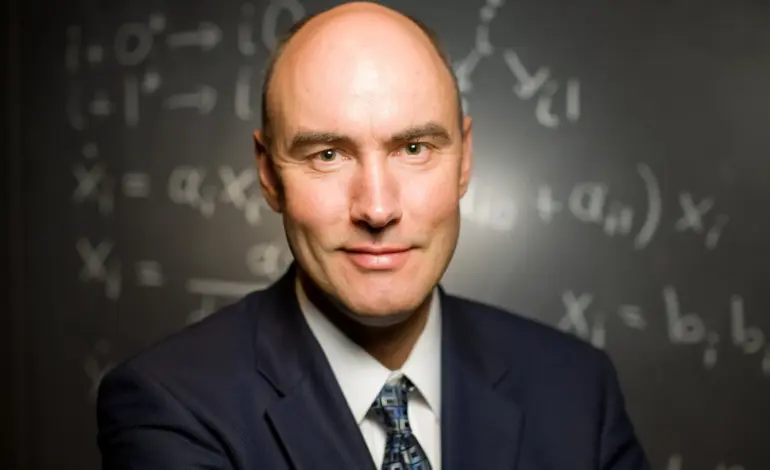
Martin Nowak is a leading theoretical biologist whose work has significantly shaped our understanding of evolution, cooperation, and the dynamics of biological systems. As the director of the Program for Evolutionary Dynamics at Harvard University, Nowak has delved into complex theories that govern life’s processes, pushing the boundaries of how we perceive interactions within biological populations.
Contributions to Evolutionary Dynamics
Nowak’s research focuses on the mathematical models that underpin evolutionary dynamics, a field vital for understanding how species evolve over time. His groundbreaking work has introduced key concepts such as the role of cooperation in evolution, challenging the traditional notion that competition is the sole driver of natural selection. In a series of influential papers, he has shown that cooperative behaviors can also enhance survival and reproduction rates, fundamentally altering how scientists approach evolutionary biology.
Recent Research and Publications
In recent years, Nowak has published several papers addressing the mechanisms of cooperation and the emergence of cooperation in various biological contexts. His 2023 publication, “Cooperation and Natural Selection”, explores how cooperative strategies can emerge even among selfish individuals, using mathematical models to analyze the stability of these behaviors in populations. This research has implications beyond biology, influencing fields such as economics, sociology, and artificial intelligence.
Impact and Significance
The significance of Martin Nowak’s work extends far beyond the confines of theoretical biology. His interdisciplinary approach has paved the way for new research into the evolution of various species, contributing to discussions regarding climate change, conservation, and the health of ecosystems. By bridging complex mathematical theories with biological realities, Nowak has provided valuable insights that can inform policy and practices aimed at preserving biodiversity.
Conclusion
As we navigate an ever-changing world, the contributions of scientists like Martin Nowak are more critical than ever. His research not only enhances our understanding of evolutionary principles but also serves as a framework for addressing pressing global challenges. As future studies continue to build on his findings, it is evident that Nowak’s work will remain integral to the advancement of evolutionary biology and its applications across various domains.