Artemis 2 Launch Date Announced: The Future of Lunar Exploration
Introduction
The Artemis 2 mission represents a significant milestone for NASA and humanity’s return to the Moon. Slated to launch in 2024, this mission will carry astronauts aboard the Orion spacecraft for a journey around the Moon, paving the way towards sustainable lunar exploration and the future of space travel. Understanding the details around the Artemis 2 launch date and its implications highlights the importance of this mission in the context of space exploration.
Details of the Artemis 2 Mission
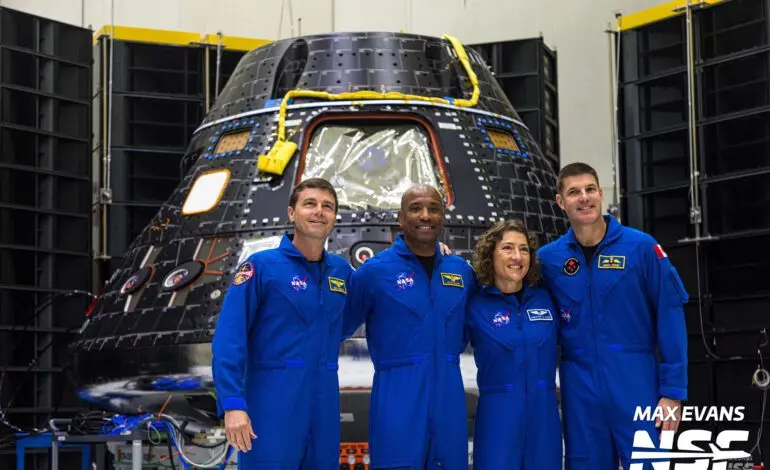
NASA officially announced that Artemis 2 is planned to launch in November 2024 as part of the Artemis program, aiming to establish a long-term presence on the Moon by the end of the decade. This mission will follow the successful Artemis 1 uncrewed flight, which tested the systems of the Space Launch System (SLS) and the Orion spacecraft. Artemis 2 will be the first crewed mission of the Artemis program, carrying four astronauts—Commander Reid Wiseman, Pilot Victor Glover, Mission Specialist Christina Koch, and Mission Specialist Jeremy Hansen.
During the mission, the crew will orbit the Moon, testing essential life support systems and preparing for the more complex Artemis 3 mission, which aims to land astronauts on the lunar surface. The spacecraft will journey over 10 days, demonstrating NASA’s ability to send humans to lunar distances and back safely.
Significance of the Artemis 2 Launch
The Artemis program is not just focused on lunar exploration; it is also a stepping stone towards Mars. The technologies and methodologies developed through these missions will inform future human missions to the Red Planet. Additionally, Artemis 2’s mission will enable astronauts to conduct research in deep space, gathering invaluable data.
Public and scientific community interest in this launch remains high, as it represents the next leap in human space exploration. One of the key objectives of the Artemis program is to promote international and commercial partnerships, which played a vital role in the development of the Artemis 2 mission. Collaboration is essential for the program’s success, including contributions from various private aerospace companies.
Conclusion
As the Artemis 2 launch date approaches, anticipation grows for a new era of lunar exploration and beyond. The mission not only underscores NASA’s commitment to returning humans to the Moon but also sets the stage for future interplanetary exploration. For space enthusiasts and the general public alike, the Artemis 2 mission is a reminder of the endless possibilities that lie ahead as humanity ventures further into space. The achievements stemming from this mission will likely have profound implications for scientific understanding and capabilities in the years to come.