NASA Astronaut Sunita Williams Announces Retirement
Introduction
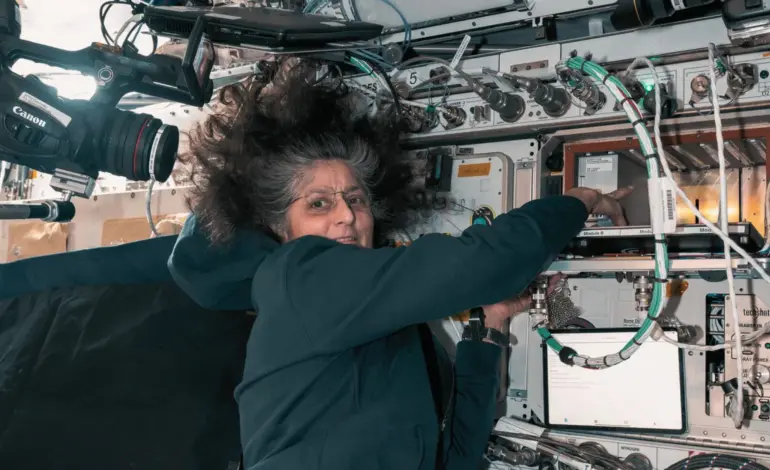
Nasa astronaut Sunita Williams, a trailblazer in space exploration, has officially announced her retirement following an illustrious career that has spanned over three decades. Williams, a veteran of multiple space missions, has not only contributed to scientific research but has also become an inspiring figure for aspiring astronauts worldwide. Her retirement marks the end of an era for NASA and highlights the increasing importance of human spaceflight in advancing our understanding of the universe.
Career Highlights
Williams joined NASA in 1998 and quickly established herself as a key player in several high-profile missions. She holds the record for the longest cumulative spaceflight duration for a female astronaut, with a total of 665 days, 22 hours, and 22 minutes spent in space. Her most notable missions include Expedition 14, where she lived and worked on the International Space Station (ISS), and Expedition 33, during which she was the first woman to command the ISS.
Throughout her career, Williams has participated in 7 spacewalks, contributing significantly to the assembly and maintenance of the ISS. Besides her technical feats, she has also worked on various experiments focused on understanding the effects of microgravity on human physiology. Her engagement with educational outreach has inspired countless young people, particularly young women, to pursue careers in science, technology, engineering, and math (STEM).
Retirement Announcement
The announcement of Williams’ retirement comes as she looks forward to new ventures beyond her life in space. In a recent statement, she expressed her gratitude for the opportunities afforded to her by NASA and the incredible experiences that come with being an astronaut. “I am incredibly proud of all that we have accomplished as a team, and I look forward to finding new ways to contribute to science and exploration,” she said.
Looking Ahead
As Williams transitions into retirement, the future for human space exploration continues to evolve. With NASA’s Artemis program aiming to return humans to the Moon by 2024 and ambitions to eventually send astronauts to Mars, Williams’ legacy will undoubtedly inspire the next generation of astronauts. As space exploration grows increasingly complex, the contributions of pioneers like Sunita Williams will always be a cornerstone of NASA’s mission.
Conclusion
Sunita Williams’ retirement marks not just the end of her personal journey but the transition of a new phase in human spaceflight exploration. Her remarkable achievements and dedication to science and education will inspire generations to come. As NASA and other organizations pursue ambitious goals in space, the influence of icons like Williams will undoubtedly pave the way for future explorations.