The 2030 World Cup will feature a unique format, with matches hosted across Spain, Portugal, and Morocco, alongside initial games in Uruguay, Argentina, and Paraguay. This marks the first time the tournament will span six countries and three continents, coinciding with the World Cup‘s 100th anniversary. The inaugural match is scheduled for June 8, 2030, in Montevideo, Uruguay, at the Centenario Stadium, which is undergoing renovations.
The tournament will commence with a match in Uruguay, followed by games in Argentina‘s Buenos Aires and Paraguay‘s capital, Asunción, during the same weekend. These three South American nations, along with the primary hosts, will automatically qualify. Following these initial fixtures, teams and fans will travel approximately 6,000 miles for the group stage matches in Europe and North Africa. FIFA has incorporated additional rest days to accommodate the intercontinental travel.
Host nations and key venues
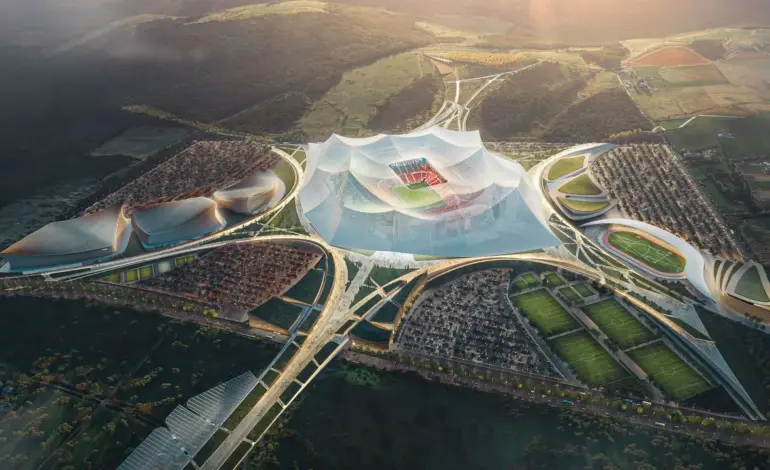
Spain, hosting the World Cup for the first time since 1982, will stage the majority of the games, with matches planned for Madrid and Barcelona, among other cities. Portugal will host games for the first time in Lisbon and Porto. Morocco will become the first North African nation to host the tournament, with matches distributed across six cities, including Tangier and Agadir. The country is also constructing the Grand Stade Hassan II in Benslimane, a 115,000-seat arena.
The Centenario Stadium in Montevideo, designated by FIFA as a Historical Monument of World Football, will undergo a 30-month overhaul, including the addition of a roof to most stands and an increase in capacity from 60,235 to 63,000. The final match of the tournament is scheduled for July 21, 2030, though its location is yet to be determined. Potential venues include Madrid‘s Santiago Bernabéu and a redeveloped Camp Nou in Barcelona.
Early team outlooks for 2030
As preparations for 2030 begin, several national teams are being assessed for their potential performance. Spain, as a co-host and the defending World Cup champion, is considered a strong contender. The team features players such as Unai Simón (32), Gavi (25), and Lamine Yamal (22), with additional talent like Dean Huijsen (25) and Fermin López (27) emerging.
France, under new management with Zinedine Zidane, will aim to build on its recent performances. Key players expected to feature include Kylian Mbappé (31), supported by Michael Olise (28) and Désiré Doué (24). Defensively, Dayot Upamecano (31) and William Saliba (29) are anticipated to be central figures.

England demonstrated resilience in the previous tournament, reaching the semi-finals. The team is expected to have a strong core, including Declan Rice (31), Jude Bellingham (26), and Bukayo Saka (28). However, the role of Harry Kane (36) and the goalkeeping position remain areas of focus. Morocco, a co-host, also shows promise, having achieved back-to-back World Cup quarter-final appearances. Players like Achraf Hakimi (31) and Ismael Saibari (29) are expected to be key, alongside emerging talents from their recent U-20 World Cup win.
Argentina, despite the departure of Lionel Messi, will rely on players like Julián Álvarez (30) and Enzo Fernández (33) to lead their campaign. Portugal faces questions about its attacking options following Cristiano Ronaldo‘s decision not to play in 2030. Goalkeeper Diogo Costa (30) and defenders Gonçalo Inácio (28) and Nuno Mendes (27) are expected to form a solid foundation. Norway, with Erling Haaland (29) leading the line, is also expected to be a competitive team after their quarter-final run.
The 2030 World Cup will feature 104 matches over approximately six weeks, concluding with the final on July 21, 2030.
Source: theguardian.com