Labour Day USA: Workers Rise Against Billionaires
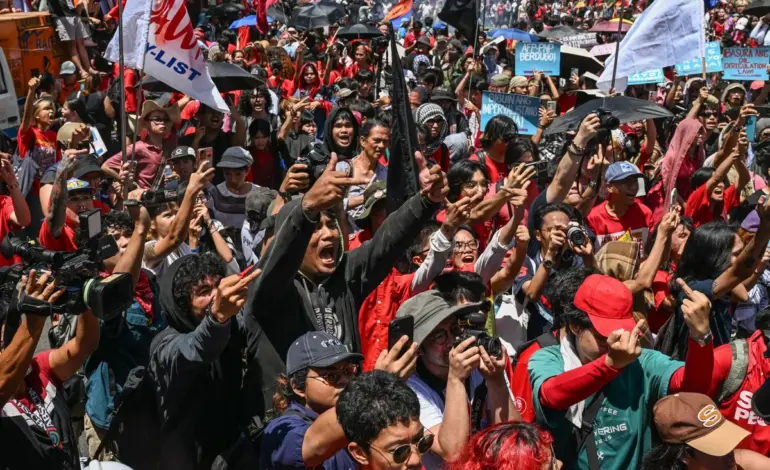
Despite not being a public holiday, protests are planned across the USA for Labour Day under the slogan ‘workers over billionaires.’ The upcoming rallies reflect deepening concerns about workers’ rights amidst rising income inequality and fears of a looming global recession.
The roots of this movement trace back to the historic struggles for an eight-hour workday, which began in Chicago in 1886. This pivotal moment—the Haymarket incident—strengthened the international voice for workers’ rights. Today, as we face unprecedented economic challenges, that legacy is more relevant than ever.
Key statistics:
- Approximately 550,000 workers in Gaza and the West Bank currently have no income due to an ongoing economic crisis.
- Before the eight-hour workday was established, workers were often forced to toil between 12 to 16 hours daily.
- The European Trade Union Confederation represents 93 trade union organizations across 41 European countries.
The theme for Labour Day in 2026 is ‘Ensuring a Healthy Psychosocial Work Environment.’ This focus highlights the importance of mental well-being in workplaces—a concern that has gained traction as more workers demand better conditions. As Josua Mata noted, “Every Filipino worker now is aware that the situation here is deeply connected to the global crisis.”
Trade unions and coalitions are calling for urgent measures to address extreme wealth disparities. The European Trade Union Confederation has been vocal about this issue, stating, “Working people refuse to pay the price for Donald Trump’s war in the Middle East.” Such sentiments resonate with many who feel marginalized by economic policies favoring the wealthy.
As protests unfold, they will likely amplify calls for higher wages and economic relief—especially given recent spikes in fuel prices that have strained household budgets. Renato Reyes articulated this urgency: “There will be a louder call for higher wages and economic relief because of the unprecedented spikes in fuel prices.”
What remains uncertain is how these demonstrations will influence policy or public sentiment. With fears of a global recession looming, many are left wondering how long these protests can sustain momentum. Nevertheless, as history shows us, collective action often paves the way for meaningful change.