180 million year old ichthyosaur discovery challenges survival assumptions
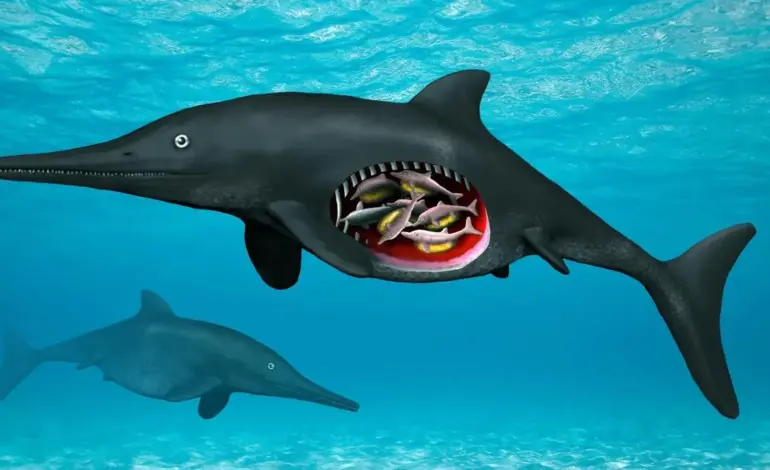
The discovery of a 180-million-year-old ichthyosaur fossil in Mistelgau, Germany, has upended previous assumptions about these ancient marine reptiles. This specimen, belonging to the genus Temnodontosaurus, measures an estimated 21 feet long and includes a nearly complete skull, lower jaw, shoulder girdle, spine, and over 100 teeth.
However, what stands out are the severe jaw injuries evident on the fossil. These injuries raise intriguing questions about its ability to survive in the competitive marine ecosystems of the Jurassic period. Stefan Eggmaier noted, “The injuries likely significantly limited the animal’s ability to catch prey.” Yet, the fossil also shows signs of adaptation—such as worn teeth and the presence of gastroliths in its abdominal cavity—suggesting a shift in feeding behavior.
The Mistelgau site has been a treasure trove for marine fossils since excavations began in 1998. This find is one of the youngest known specimens of its kind, challenging earlier beliefs about ichthyosaur survival timelines in this region. Ulrike Albert commented on the significance of the find: “Our Temnodontosaurus fossil is one of the youngest finds of this ichthyosaur genus to date.” Such discoveries provide critical insights into ecological dynamics during a pivotal era.
As researchers continue to analyze this remarkable specimen, they will likely uncover more about how these ancient creatures adapted to their environments—an exploration that could reshape our understanding of convergent evolution among marine reptiles. The implications for fossil preservation techniques may also be profound; how well can we protect such invaluable finds from decay?