David Gross Physics: A Nobel Laureate Warns of Humanity’s Future
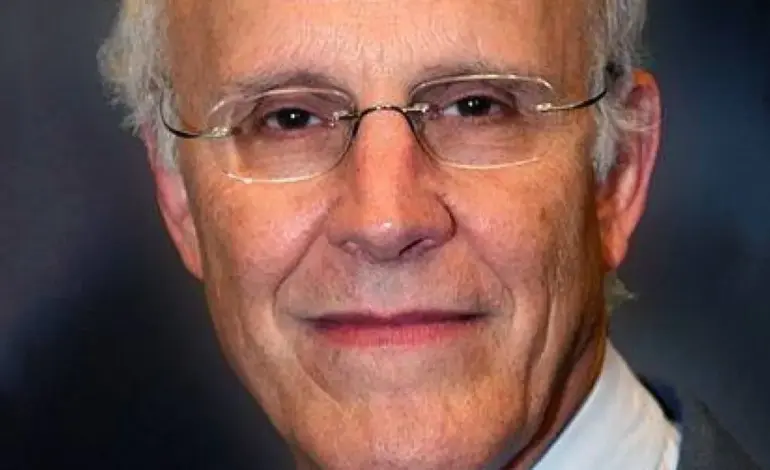
David Gross, the Nobel Prize-winning physicist, recently raised a stark warning about humanity’s future. He suggests that we may not survive the next 50 years due to escalating risks of nuclear war.
In a recent discussion, Gross detailed his estimates—he believes there is a 2% chance of nuclear war each year. This leads to an expected lifetime for humanity of roughly 35 years. “The chances of you living 50 years are very small,” he stated, underscoring his profound concern.
Gross is not just any physicist; he won the Nobel Prize in Physics in 2004 for discovering asymptotic freedom in the theory of strong interactions. This principle reveals that as quarks come closer together, the force binding them weakens. His work has significantly contributed to our understanding of particle physics and the unification of fundamental forces.
Yet, despite his groundbreaking contributions to science, Gross’s current focus is on a pressing global issue—the risk of nuclear conflict. He argues that this risk has increased in recent years, particularly with nine nuclear powers currently in existence. Such complexity raises alarms about potential confrontations that could lead to catastrophic outcomes.
“We’re entering an incredible arms race,” he remarked, highlighting how geopolitical tensions can spiral into dangerous territory. The implications are staggering: if nations continue down this path without restraint or dialogue, the consequences could be dire.
His recent recognition with a $3 million Special Breakthrough Prize in Fundamental Physics reflects his ongoing influence in theoretical physics. However, it’s his warnings about humanity’s fragility that resonate deeply today—a reminder that scientific achievement does not shield us from existential threats.
Looking ahead, observers are left pondering what measures can be taken to mitigate these risks. Can diplomatic efforts stem the tide of an arms race? Or will scientific advancements merely serve as a backdrop to an increasingly perilous world? Details remain unconfirmed.
As we navigate this complex landscape shaped by both scientific discovery and geopolitical strife, Gross’s insights compel us to reflect on our collective future—one that hangs precariously in balance against the backdrop of human conflict and technological advancement.