राघव चड्ढा: Raghav Chadha’s Bittersweet Acknowledgment in Rajya Sabha
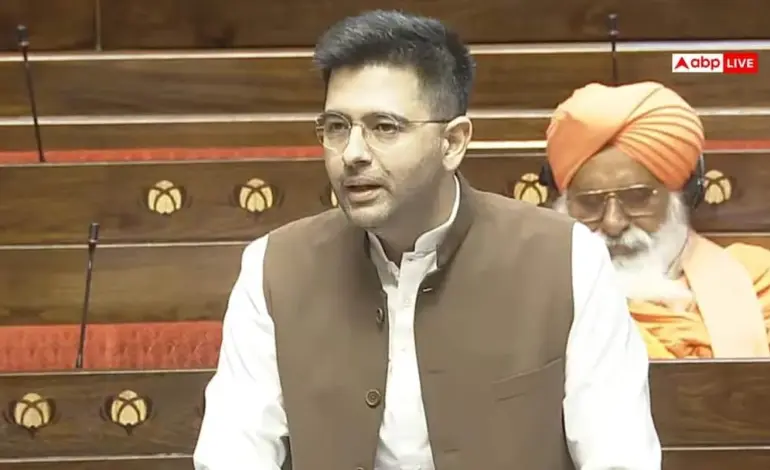
Raghav Chadha’s remarks were made during a pivotal moment in the Rajya Sabha — the election of the new Deputy Chairman. This was not just another routine vote; it marked a significant point in Chadha’s political journey, especially after his recent removal from the position of Deputy Leader.
During this session, Chadha extended his congratulations to Harivansh on securing his third term unopposed. “I congratulate Harivansh ji on his third term as Deputy Chairman,” he stated, a sentiment that echoed through the chamber.
Yet, beneath this congratulatory facade lay a complexity. Chadha described his relationship with Harivansh as “bittersweet.” This phrase encapsulates more than just personal feelings; it reflects the intricate dynamics often present in political relationships.
Chadha’s acknowledgment of their complicated rapport raises questions about loyalty and rivalry within the ranks of the Aam Aadmi Party (AAP). His desire to transform this “bittersweet relationship” into a sweeter one hints at aspirations for future collaboration — or perhaps reconciliation.
Moreover, he made a request that stood out: “If you could give us a couple of extra minutes after the bell rings, we could present our points more strongly.” This plea for additional time underscores the urgency he feels in making his voice heard amidst political transitions.
The backdrop of these events is rich with implications. The Punjab Government and the Punjab-Haryana High Court loom large in discussions surrounding governance and accountability. The interplay between these institutions and individual politicians like Chadha will shape future legislative agendas.
Observers are keenly watching how this evolving situation will unfold. Will Chadha’s candid acknowledgment lead to a more collaborative atmosphere in the Rajya Sabha? Or will it deepen existing divides?
As reactions from various quarters emerge, one thing is clear: Raghav Chadha’s words are not merely ceremonial. They signal an underlying tension and potential for change within Indian politics.
Details remain unconfirmed regarding any immediate repercussions from this session, but the political landscape is certainly shifting. The implications of such interactions can resonate far beyond just one meeting.
This moment serves as a reminder — politics is rarely black and white. It thrives on nuances, relationships, and sometimes, that bittersweet taste of compromise.