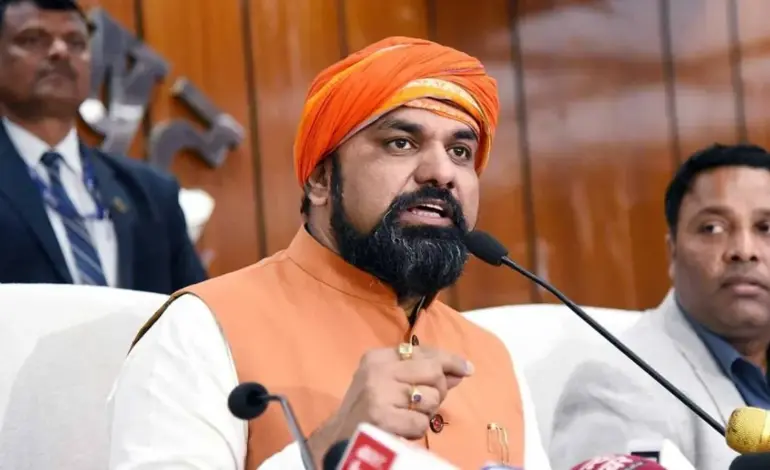
What does the resignation of Nitish Kumar mean for the political landscape of Bihar? With Kumar stepping down, Samrat Chaudhary is set to become the next Chief Minister, marking a significant shift as he will be the first Chief Minister from the Bharatiya Janata Party (BJP) in the state. This transition not only reflects a change in leadership but also a potential realignment of political power in Bihar.
Chaudhary, who has been active in state politics for over three decades, previously served as the Deputy Chief Minister of Bihar. His ascent to the Chief Minister’s office comes after a proposal from Deputy Chief Minister Vijay Sinha and an endorsement from Union Minister Shivraj Singh Chouhan. This backing signifies the BJP’s confidence in Chaudhary’s leadership, especially following the party’s successful performance in the 2020 assembly elections, where they won 74 seats under his guidance.
Born on November 16, 1968, Chaudhary hails from the Koeri-Kushwaha caste, which comprises approximately 4.2% of Bihar’s population. His political journey began in 1999 when he was appointed as the Minister of Agriculture in the RJD-led government. Since joining the BJP in 2018, he has rapidly risen through the ranks, becoming the state president in 2023. His diverse experience in governance and party leadership positions him as a capable successor to Kumar.
Nitish Kumar’s resignation marks the end of his over two-decade tenure as Chief Minister, a period characterized by significant political maneuvering and shifting alliances. Kumar’s departure opens the door for a new era in Bihar politics, one that Chaudhary is eager to embrace. He expressed his gratitude to the BJP for the opportunity, stating, “This is not merely a position for me, but a sacred opportunity to serve the people of Bihar, to fulfil their trust and dreams.” Such sentiments resonate with many in the state who are looking for a fresh approach to governance.
Chaudhary’s commitment to the people of Bihar is further emphasized in his pledge to lead with “complete dedication, commitment, and integrity.” As he prepares for the oath-taking ceremony scheduled for April 15, 2026, the expectations from his leadership are high. His ability to navigate the complex political landscape and address the pressing issues facing Bihar will be crucial in determining his success.
While the BJP’s rise in Bihar is notable, it also raises questions about the future of opposition parties in the state. Kumar’s resignation could lead to a reconfiguration of alliances, particularly for the Janata Dal (United) and the Rashtriya Janata Dal, who have historically been significant players in Bihar politics. The dynamics of these parties in response to Chaudhary’s leadership will be closely watched.
As Bihar stands on the brink of this political transition, the implications of Chaudhary’s leadership remain to be seen. Will he be able to fulfill the aspirations of the electorate and steer the state towards prosperity? The coming months will reveal how his administration addresses the challenges ahead and whether he can maintain the BJP’s momentum in Bihar.
Details remain unconfirmed regarding the specific policies Chaudhary plans to implement, but his track record and the support from the BJP suggest a proactive approach to governance. The political landscape in Bihar is shifting, and with it, the hopes and expectations of its citizens are evolving as well.