Uttar Pradesh State Board of High School and Intermediate Education: Court Ruling on Officiating Principals’ Salaries
What the data shows
The recent ruling by the Allahabad High Court raises a crucial question: Should officiating principals of grant-in-aid institutions receive salaries equivalent to their regular counterparts? The answer, as determined by the court, is a resounding yes. This decision underscores the significant responsibilities these officiating principals undertake, which often exceed those of other teaching staff.
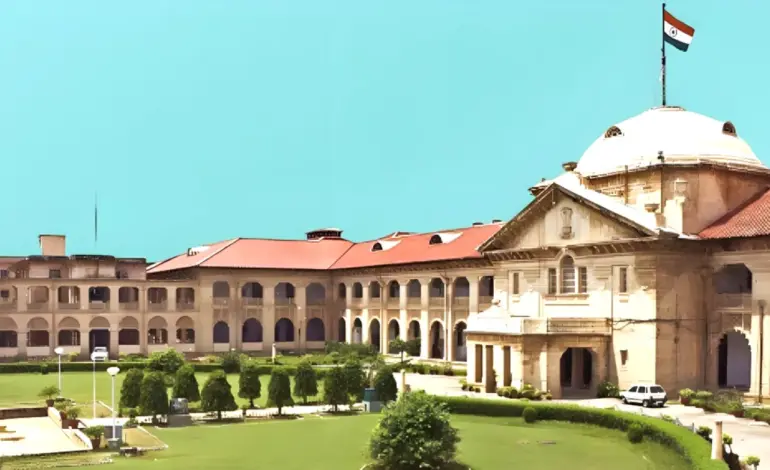
On April 6, 2026, the Allahabad High Court ruled that officiating principals must be compensated at a rate equal to that of regular principals. The court highlighted that these individuals perform higher and more onerous duties than other teachers, thus justifying their entitlement to a salary that reflects their responsibilities. Justice Saumitra Dayal Singh and Justice Swarupama Chaturvedi articulated that “his right to receive higher salary commensurate to such duties discharged, may never be defeated.” This ruling not only affirms the value of officiating principals but also sets a precedent for future educational governance in Uttar Pradesh.
The backdrop to this ruling involves the U.P. Education Service Selection Commission Act, 2023, which supersedes certain provisions of the U.P. Intermediate Education Act, 1971. The court noted that while this new act addresses various aspects of educational administration, it does not negate the provisions for appointing ad-hoc or officiating principals under the grant-in-aid scheme. This legal nuance is crucial as it ensures that the rights of officiating principals are preserved even amidst legislative changes.
Furthermore, the court allowed the petitioners to continue in their roles as officiating principals until regular appointments are made, ensuring stability in leadership within these institutions. The ruling also stipulates that if a vacancy persists, officiating principals are entitled to a higher salary for up to 30 days, reinforcing the notion that their roles are indispensable to the functioning of educational institutions.
In previous cases, such as Dhaneshwar Singh Chauhan vs. District Inspector of Schools and Narbdeshwar Misra vs. District Inspector of School, Deoria, the courts have consistently recognized the need for fair compensation for officiating principals. This latest ruling builds on that foundation, emphasizing that the failure of management committees to notify vacancies should not undermine the rights of officiating principals to receive appropriate remuneration.
As the education landscape in Uttar Pradesh evolves, this ruling may have broader implications for how educational institutions manage leadership roles and compensation. The court’s decision reflects a growing recognition of the complexities involved in educational administration, particularly in grant-in-aid institutions where funding and management practices can significantly impact the quality of education.
Looking ahead, the implementation of this ruling will be closely monitored. Educational stakeholders, including the U.P. Education Service Selection Commission and various management committees, will need to adapt to these changes. The court’s directive not only addresses immediate salary concerns but also raises questions about the long-term governance of educational institutions in Uttar Pradesh. Details remain unconfirmed regarding how these changes will be operationalized, but the ruling undoubtedly sets a critical precedent for the future of educational leadership in the state.