Iran israel war lockdown: Iran-Israel War Lockdown: A Crisis Unfolding
The wider picture
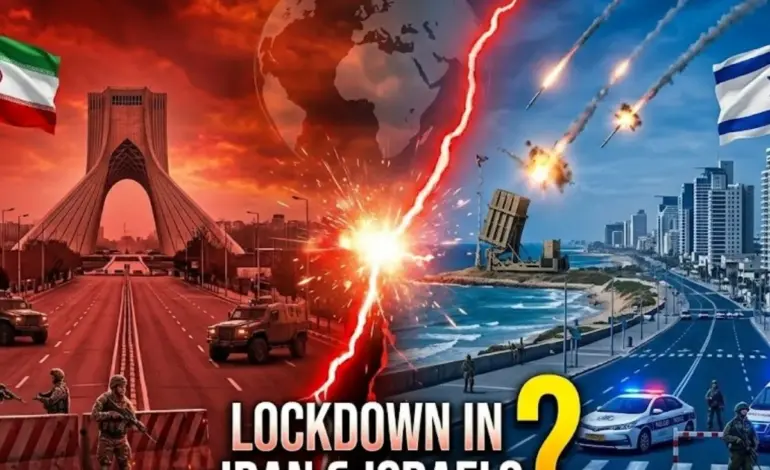
The Iran-Israel war, ignited by the US and Israel’s targeted strikes against Iran on February 28, which resulted in the death of Ayatollah Ali Khamenei, has escalated into a situation of unprecedented severity. Both nations are now experiencing severe ‘de facto’ lockdowns, with air and missile strikes disrupting daily life and infrastructure. In Israel, while a formal nationwide lockdown has not been declared, strict guidelines have created conditions akin to a partial lockdown in many areas, significantly affecting civilian movement and public gatherings.
In stark contrast, Iran is largely inaccessible for standard activities due to relentless airstrikes targeting its military and infrastructural capabilities. The situation has led to a staggering 97% drop in maritime traffic through the Strait of Hormuz, a crucial passageway for 20% of the world’s oil supply. This blockade has triggered a global oil supply shock, with Brent crude prices soaring to between $100 and $120 per barrel, marking the largest supply disruption in the history of the global oil market, according to the International Energy Agency.
The human cost of this conflict is alarming, with reports indicating that between 1,900 and 3,000 people have died in Iran, while Israel has recorded at least 15 to 17 fatalities. As the conflict continues to unfold, airspace across much of the Middle East remains heavily restricted or closed, grounding millions of passengers and stranding travelers. This has led to a ripple effect, impacting not just the immediate region but also global travel and commerce.
Initial reactions from key global leaders reflect the gravity of the situation. Russian President Vladimir Putin remarked, “The consequences of the conflict in the Middle East are still difficult to accurately predict,” suggesting a level of uncertainty that resonates with many observers. He further noted that the impact of the conflict could be compared to the disruptions caused by the coronavirus pandemic, highlighting the potential for widespread economic and social ramifications.
In India, panic arose from rumors of a potential lockdown, prompting the government to clarify that no such measures were planned. Indian Prime Minister Narendra Modi emphasized the need for readiness in the face of a rapidly evolving geopolitical scenario, stating, “The rapidly evolving geopolitical scenario demanded readiness for unforeseen challenges.” This sentiment underscores the interconnectedness of global markets and the potential for localized conflicts to have far-reaching effects.
As the situation develops, the focus remains on ensuring an uninterrupted supply of essential goods, including petroleum products and fertilizers. However, the ongoing military operations and the lack of a formal ceasefire contribute to a climate of uncertainty. Observers are left to ponder the next steps, with many calling for diplomatic efforts to de-escalate tensions and restore stability in the region.
Details remain unconfirmed regarding the full extent of the lockdowns and their implications. The conflict continues to evolve, and the international community watches closely, aware that the ramifications of this war could reshape the geopolitical landscape for years to come.