Stock Market Holidays 2026: A Disruptive Calendar for Indian Traders
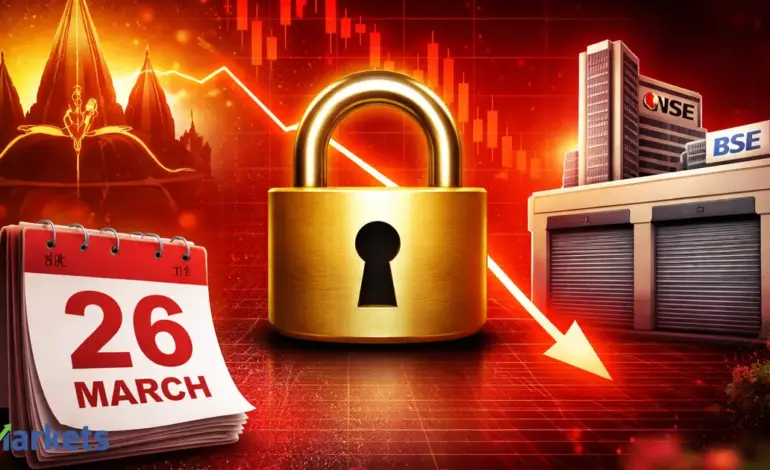
The Indian stock market is gearing up for a series of holidays in 2026, which will undoubtedly impact trading and banking operations. With three holidays in March alone, including Ram Navami on March 26, Mahavir Jayanti on March 31, and Good Friday on April 3, traders are bracing for interruptions in their activities.
Following March, April will see additional holidays, such as Ambedkar Jayanti on April 14 and Maharashtra Day on May 1. This sequence of holidays could lead to a slowdown in market activity, particularly as the market grapples with a decline of 7.09% in both the Sensex and Nifty indices for the month of March. Such fluctuations raise concerns about investor confidence and market stability.
Moreover, the outflow of foreign institutional investors (FIIs) has been alarming, with ₹97,000 crore pulled out in March alone, contributing to a year-to-date withdrawal of ₹1.45 lakh crore. This trend could further exacerbate the challenges faced by the market during the holiday periods.
As the year progresses, traders will encounter a total of ten remaining holidays in 2026, including significant dates like Diwali on November 10 and Guru Nanak Gurpurab on December 24. These holidays not only disrupt trading but also create uncertainty for investors looking to navigate the market effectively.
Market analysts are closely monitoring the situation, particularly the P/E ratio of the Nifty 50, which stands at 20x, indicating a potentially overvalued market amidst declining investor sentiment. The expected GDP growth rate of 7.3–7.5% may not be enough to counterbalance the negative impacts of these holidays.
As the stock market prepares for these holidays, observers are left to ponder the long-term implications for trading strategies and market dynamics. The cumulative effect of these holidays could lead to a more volatile trading environment, prompting investors to reassess their positions.
While the holidays are a part of the cultural fabric of India, their timing and frequency in 2026 could pose significant challenges for traders. As the market reacts to these developments, the focus will remain on how investors adapt to the changing landscape.
Details remain unconfirmed regarding any potential adjustments to trading schedules or operational hours during these holidays. Stakeholders will be keenly watching for announcements from the NSE, BSE, and MCX regarding any changes that may arise.