School of open learning university of delhi: Exclusion of School of Open Learning Students from Delhi University Job Fair Raises Concerns
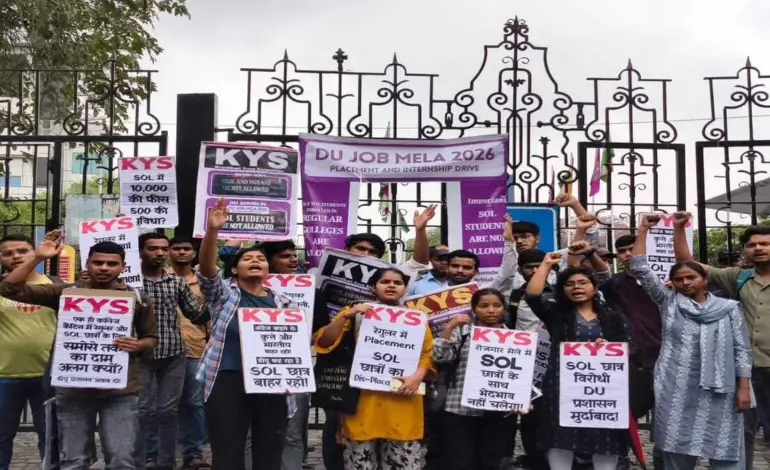
The exclusion of students from the School of Open Learning (SOL) at Delhi University from a recent job fair has raised significant concerns about discrimination and inclusivity within the university’s employment initiatives. This incident, which unfolded on March 20, 2026, saw over 93 recruiters offering more than 2,500 vacancies, yet SOL students were initially barred from participating.
The Job Mela, organized for regular undergraduate, postgraduate, and PhD students as well as alumni of Delhi University, faced immediate backlash when it was revealed that SOL students were excluded. The Krantikari Yuva Sangathan (KYS) and the Akhil Bharatiya Vidyarthi Parishad (ABVP) quickly mobilized protests against this decision, labeling it as blatant discrimination.
In response to the mounting protests, the Dean of Students’ Welfare assured that SOL students would be allowed to participate in the job fair. This assurance came after discussions between university officials and student representatives, emphasizing the administration’s recognition of the issue.
Student groups have expressed that denying SOL students access to such opportunities is not only discriminatory but also detrimental to their future prospects. “Denying SOL students participation in the job fair is discriminatory and against students’ interests,” stated a representative from ABVP.
The KYS highlighted that the principal of DU SOL and the dean of students’ welfare met with SOL students, indicating that the administration was compelled to rectify the situation. They noted, “It has been conceded that in the future, SOL students will not be barred from any such programme.” This commitment aims to prevent similar exclusions in future university-led events.
This incident is not an isolated one; it marks a recurring issue where SOL students have faced barriers to participating in university activities. The university’s previous actions have raised questions about its commitment to inclusivity and equal opportunities for all students.
As the university moves forward, the commitment to inclusivity will be tested in upcoming events. The administration’s response to this incident will be closely monitored by student groups and the broader academic community.
Details remain unconfirmed regarding any further measures the university may implement to ensure that SOL students are treated equitably in the future. The outcome of this situation could set a precedent for how student inclusivity is handled at Delhi University.