Frohnmaier: A Shift in the Political Landscape of Baden-Württemberg
Political Landscape Before the 2026 Election
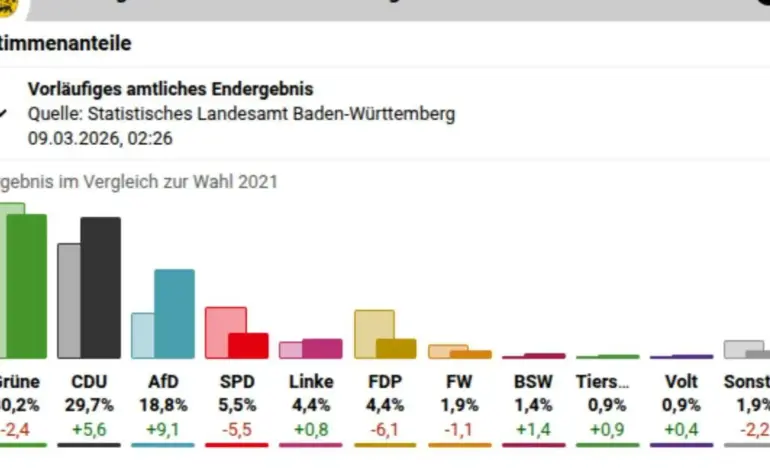
Before the recent elections in Baden-Württemberg, the political atmosphere was characterized by a strong presence of traditional parties, with the AfD struggling to gain significant traction. The party had previously garnered only 9.7% of the votes in the 2021 election, which was seen as a low point for the right-wing faction. Markus Frohnmaier, a prominent figure within the AfD, had been serving as a Bundestag member since 2017 and had aspirations for higher office, but the party’s overall influence was limited.
Decisive Changes in the 2026 Election
The 2026 election marked a turning point for the AfD, as they achieved 18.8% of the votes, reflecting a substantial increase of 9.1% from the previous election. This surge positioned the AfD as a significant player in the political landscape of Baden-Württemberg, despite Frohnmaier not being on the ballot for the 7.7 million eligible voters. His candidacy for Ministerpräsident was overshadowed by this technicality, yet the party’s overall performance indicated a growing acceptance among the electorate.
Immediate Effects on Political Dynamics
The immediate aftermath of the election results saw Frohnmaier offering collaboration to Manuel Hagel of the CDU, highlighting the AfD’s self-identification as a ‘bürgerlich-konservative Partei.’ This move was indicative of the party’s strategy to position itself as a viable alternative to the traditional parties, despite being classified as a right-wing extremist suspect by the Baden-Württemberg Office for the Protection of the Constitution. Alice Weidel, the party’s leader, expressed satisfaction with the results, emphasizing the doubling of their previous performance.
Expert Perspectives on the Shift
Political analysts have noted that the AfD’s rise could significantly alter the balance of power in the Baden-Württemberg parliament, where they are now likely to become the largest opposition party. This shift is crucial as it reflects a broader trend of increasing support for right-wing parties across Germany. Cem Özdemir, a prominent figure from the Green Party, articulated a strong stance against the AfD, stating, “For me, no office in the world is so important that I would let myself be elected with votes from the AfD.” This sentiment underscores the contentious nature of the AfD’s growing influence.
Frohnmaier’s Background and Controversies
Markus Frohnmaier, at 34 years old, has a complex background that includes being born in Romania and later adopted by a German couple. His connections to Russia and the accusations of nepotism regarding his wife’s employment have raised eyebrows within political circles. As a co-founder of the now-dissolved AfD youth organization Junge Alternative, Frohnmaier’s trajectory within the party has been marked by both ambition and controversy.
Looking Ahead
The future of the AfD in Baden-Württemberg remains uncertain but promising, as they prepare to navigate their role as a significant opposition force. Frohnmaier’s leadership will be pivotal in shaping the party’s strategies moving forward. As the political landscape continues to evolve, the implications of the AfD’s rise will be closely monitored by both supporters and critics alike.
In summary, the recent election results have marked a significant shift in the political dynamics of Baden-Württemberg, with Markus Frohnmaier and the AfD emerging as key players. The party’s increased voter support reflects changing sentiments among the electorate, setting the stage for a new chapter in regional politics.