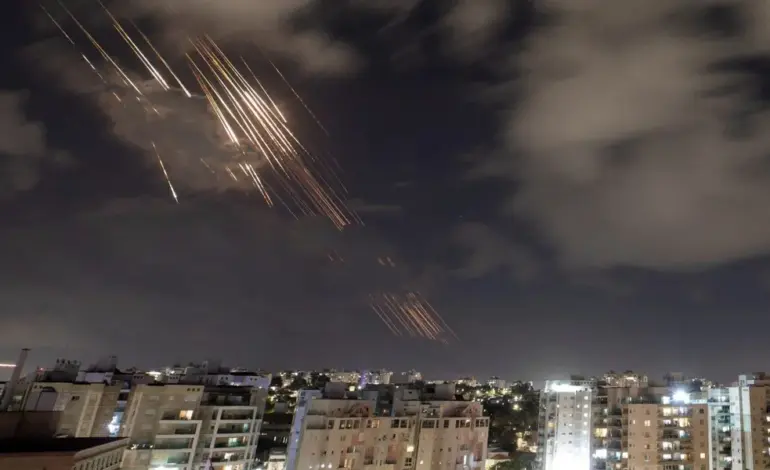
Background of the Conflict
The conflict between Israel and Iran has significantly escalated, extending beyond their borders to involve the Gulf region, Lebanon, and Iraq. Tensions have been mounting for years, driven by Iran’s nuclear ambitions and its support for militant groups like Hezbollah. The situation reached a critical point when the United States and Israel initiated large-scale strikes on Iran, targeting key infrastructure such as oil storage depots and refining facilities.
Recent Developments
Since the onset of these attacks on February 28, at least 1,332 people have been reported killed in Iran. In response, Iran has retaliated with strikes on US military assets located in Kuwait, Qatar, Saudi Arabia, and the UAE. The Iranian military has confirmed that while the Strait of Hormuz remains open, they will target US or Israeli ships that enter the area.
Statements from Key Parties
US Defense Secretary Pete Hegseth emphasized the United States’ commitment to retaliate against threats to American lives, stating, “If you kill Americans, if you threaten Americans anywhere on earth, we will hunt you down without apology and without hesitation, and we will kill you.” Meanwhile, US President Donald Trump has expressed his unwillingness to settle with Tehran, declaring that the war would continue for “a little while.”
Humanitarian Concerns
The conflict has also raised significant humanitarian concerns. Human Rights Watch has called for an investigation into a tragic attack on a primary school in southern Iran, which resulted in the deaths of at least 160 people. Additionally, the UAE’s Defence Ministry has reported that the death toll from Iran’s attacks on the UAE has risen to four.
Implications for Regional Stability
The ongoing violence has led to a 27 percent increase in Brent crude oil prices within just one week of the conflict, reflecting the broader economic implications of the war. Observers are concerned about the potential for further destabilization in the Gulf region, particularly as the conflict draws in various regional players, including the Gulf Cooperation Council and the Arab League.
As the situation continues to develop, uncertainties remain regarding the exact number of casualties and the overall impact of the ongoing strikes. Ayatollah Mohammad-Mahdi Mirbagheri has indicated that a decision on a successor to the slain Supreme Leader Ali Khamenei is nearing, which could further influence Iran’s strategic decisions moving forward.
The Israel Iran attack marks a significant escalation in a long-standing conflict, with both sides demonstrating their willingness to engage in military action. As the situation evolves, the international community watches closely, hoping for a resolution that can bring stability back to the region. Details remain unconfirmed regarding the full extent of the conflict’s impact.