Iranian President Masoud Pezeshkian Issues Apology Amid Regional Tensions
Iranian President’s Apology
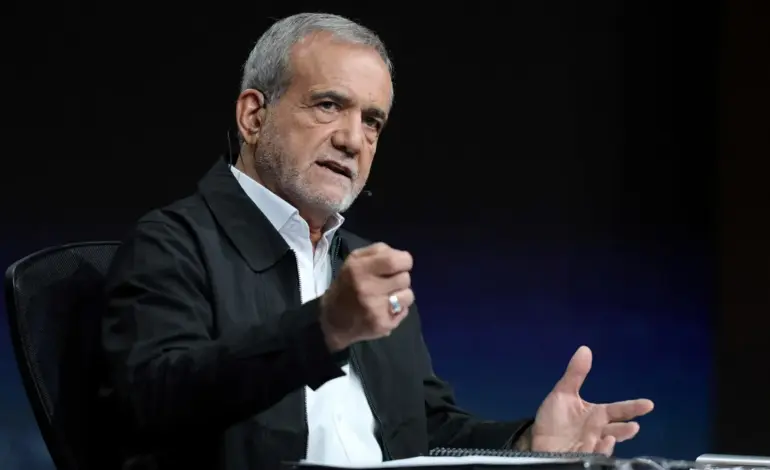
On March 8, 2026, Iranian President Masoud Pezeshkian publicly apologized to neighboring countries for recent military strikes conducted by Iran. This statement comes amidst escalating tensions in the region, particularly following a series of retaliatory actions that have drawn international scrutiny.
Immediate Circumstances
Pezeshkian’s apology was a response to backlash from regional nations and was intended to reassure them that Iran has no intention of invading other countries. He stated, “I apologise to the neighbouring countries. We have no intention of invading other countries.” However, his remarks were met with criticism from hardliners within Iran, leading to a partial amendment of his original statement.
Wider Context of Conflict
The backdrop to Pezeshkian’s apology includes a significant increase in military activity in the region. Reports indicate that Iranian drones recently struck a US air combat center at Al Dhafra Air Base, part of a broader operation that has seen thousands of strikes conducted on targets within Iran over the past week. The Iranian UN ambassador has reported that 1,332 Iranian civilians have been killed in US-Israeli air strikes, highlighting the severe human cost of the ongoing conflict.
Reactions from Iranian Officials
Following Pezeshkian’s apology, Iran’s judiciary chief, Mohseni-Ejei, criticized the president’s stance, asserting that retaliatory strikes would continue. He remarked, “Mr Pezeshkian, your stance was unprofessional, weak and unacceptable.” This reflects the internal divisions within the Iranian leadership regarding the approach to regional tensions.
Parliamentary Response
Iran’s Parliament speaker, Mohammad Bagher Ghalibaf, also weighed in on the situation, stating that as long as US bases remain in the region, peace will not be achieved. This sentiment underscores the ongoing belief among Iranian officials that external military presence is a primary source of instability in the region.
The Iranian leadership council has been in turmoil since the death of Supreme Leader Ayatollah Ali Khamenei, leading to a power struggle that has influenced the country’s foreign policy and military strategies. The internal conflict has further complicated Iran’s relations with its neighbors and the international community.
Future Implications
As tensions continue to rise, the implications of Pezeshkian’s apology and the reactions from hardliners may shape Iran’s future military and diplomatic strategies. The Iranian leadership appears divided on how to navigate the complex geopolitical landscape, which could lead to further instability in the region.
Details remain unconfirmed regarding the full impact of these developments, but the situation remains fluid as Iran grapples with both internal dissent and external pressures. The coming days will be crucial in determining the trajectory of Iran’s foreign relations and military engagements.