Amul’s Cooperative Model Expands in Odisha
What is the significance of Amul’s cooperative model in Odisha?
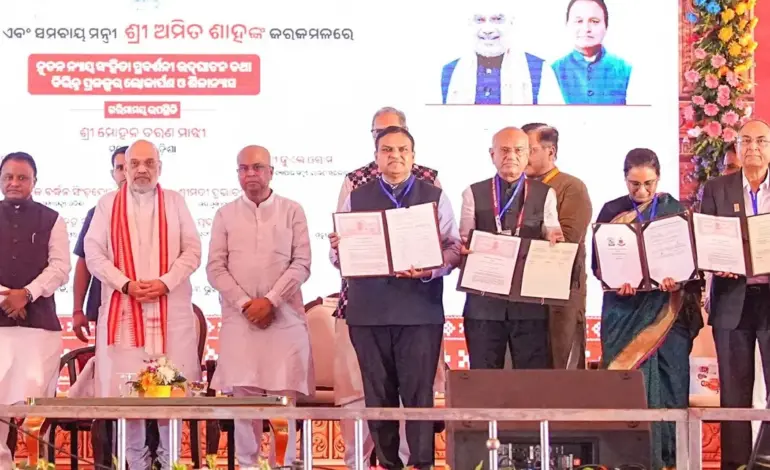
The recent inauguration of development projects in Odisha highlights the potential of the Amul-style cooperative model to transform rural economies. On March 7, 2026, Union Home Minister Amit Shah inaugurated projects worth more than Rs 3,770 crore, emphasizing the importance of the cooperative sector in enhancing local livelihoods.
Among the initiatives launched are efforts from the National Dairy Development Board (NDDB) and the Odisha State Cooperative Milk Producers’ Federation (OMFED). Shah noted that these projects aim to establish dairy cooperatives across villages in Odisha, which could significantly boost the state’s dairy and fisheries sectors.
Shah pointed out that Odisha possesses substantial potential for expanding these activities through cooperative frameworks. He stated, “Today in Gujarat, through 3.6 million rural women, Amul became a movement, and today Amul does business worth Rs 1.3 lakh crore,” showcasing the success of the cooperative model in Gujarat.
The government’s commitment to the cooperative model is further illustrated by its willingness to support the transformation of Kerala’s MatsyaFed into a national-level cooperative institution akin to Amul. George Kurian, a representative of the Central Government, remarked, “If the Kerala government proposes a comprehensive development plan, the Centre would extend financial and technical support to scale up MatsyaFed into a nationwide cooperative framework.”
In addition to dairy initiatives, the projects also include a new sulphuric acid stream at the Indian Farmers Fertiliser Cooperative Limited (IFFCO), aimed at bolstering domestic fertilizer production. This diversification reflects a broader strategy to enhance agricultural productivity and sustainability.
As part of these initiatives, 690 beneficiaries are expected to receive training in fisheries-related activities, while 400 women are set to undergo leadership and entrepreneurship training. These educational programs are designed to empower local communities and foster economic independence.
The cooperative sector has historically played a transformative role in strengthening rural economies in India. With the ongoing support from the government and the successful model established by Amul, similar initiatives may soon flourish across other states.
While the immediate impact of these projects is promising, details remain unconfirmed regarding the specific timelines for implementation and the extent of community engagement. The success of these initiatives will depend on effective collaboration between government bodies and local stakeholders.