Understanding the Crimson Moon: An Important Celestial Event
Introduction
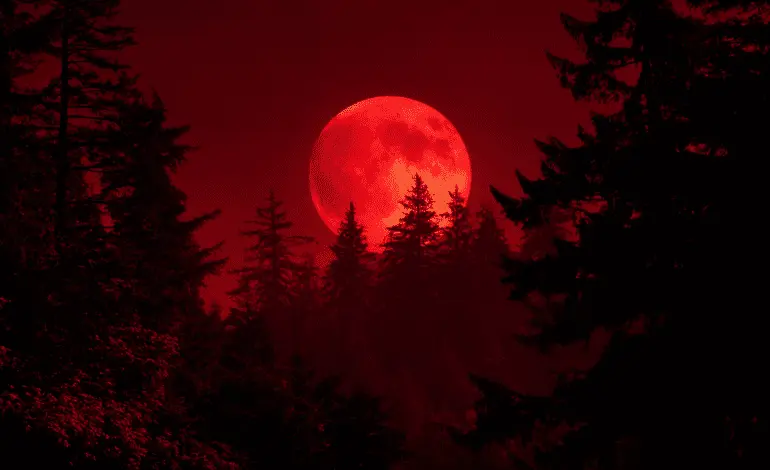
The crimson moon, often referred to as the blood moon, is a captivating celestial spectacle that occurs during a total lunar eclipse when the Earth passes directly between the sun and the moon. As the moon is cast in a deep red hue, this phenomenon captivates stargazers and science enthusiasts alike. Understanding the crimson moon’s importance goes beyond its aesthetic appeal; it has cultural significance in various societies and informs our understanding of lunar cycles.
Occurrence and Signs
The crimson moon is not a rare event, occurring approximately once every two to three years, but its timing can vary widely based on geography and atmospheric conditions. The latest occurrence was on November 8, 2022, which captivated watchers across the globe. When this spectacle takes place, the sunlight scattered through the Earth’s atmosphere filters and refracts to create a spectrum of colors, resulting in the moon appearing a rich red. This vivid transformation has inspired myths and tales throughout history, often regarded as a sign of change or foreboding in various cultures.
Cultural Significance
Throughout history, the blood moon has held significant meaning for various civilizations. For instance, the ancient Indigenous peoples of North America and several Asian cultures viewed the crimson moon as a period of transformation and renewal. In contemporary times, it has been associated with various cultural and religious interpretations, often signaling a time for reflection or spiritual cleansing. Astrologically, many believe that the blood moon can impact personal lives according to one’s zodiac sign, adding layers of meaning and interpretation to observations of celestial events.
Scientific Insights
From a scientific perspective, the crimson moon provides valuable insights into celestial mechanics and the Earth’s atmosphere. Researchers and astronomers take advantage of such occurrences to study atmospheric conditions on Earth that contribute to the moon’s coloration. The study of lunar eclipses has expanded our understanding of light, color, and the behavior of the Earth’s atmosphere.
Conclusion
The crimson moon is more than just a stunning visual experience; it is a significant event steeped in historical and cultural richness, intertwined with our understanding of the cosmos. As we look forward to future occurrences, the crimson moon offers an opportunity for education, celebration, and introspection. Its presence in our skies not only reminds us of our connection to the universe but also encourages us to explore the stories and meanings that lie within both the sky and our lives.