The Impact of AI in Healthcare: A New Era for Patient Care
Introduction
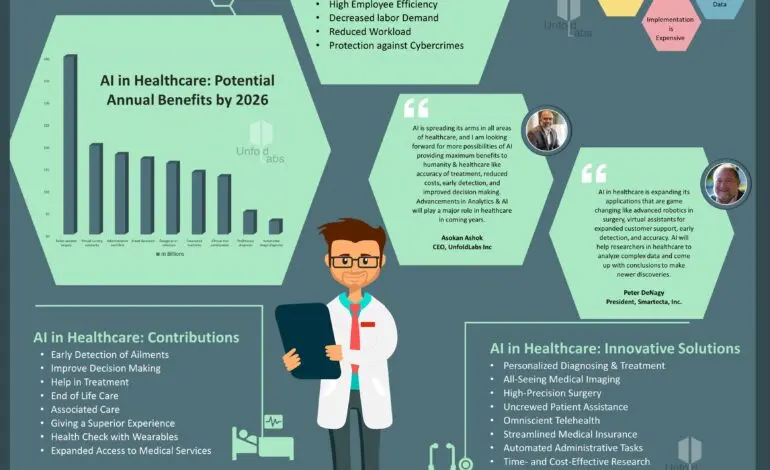
Artificial Intelligence (AI) is rapidly transforming the landscape of healthcare. As technology evolves, healthcare systems are increasingly integrating AI to improve patient outcomes, optimize operations, and enhance diagnostic accuracy. The significance of AI in healthcare cannot be overstated; it promises to alleviate the burden on healthcare professionals while ensuring that patients receive timely and precise care.
Recent Developments in AI and Healthcare
In recent months, several notable advancements have occurred in the field of AI in healthcare. Companies like IBM and Google Health are pioneering AI algorithms capable of analyzing medical images—such as X-rays and MRIs—with exceptional precision. According to a recent report from the World Health Organization (WHO), AI-driven tools could reduce diagnostic errors by 30%, thus improving the overall accuracy of diagnoses.
Moreover, AI applications in predictive analytics have gained significant traction. For instance, machine learning models are being trained to predict patient outcomes based on historical data. This allows healthcare providers to anticipate complications and facilitate early interventions, thereby enhancing patient safety and care quality. A 2023 study published in the Journal of Medical Internet Research revealed that hospitals utilizing predictive analytics saw a 20% decrease in readmission rates.
AI Applications in Patient Care
The integration of AI into various aspects of patient care is already evident. Virtual health assistants and chatbots are capable of triaging patients, answering medical inquiries, and reminding patients about medication schedules. These tools can relieve some of the strains on healthcare systems, allowing professionals to focus on more complex tasks.
Furthermore, AI technology is employed in developing personalized treatment plans. Machine learning algorithms analyze genetic information and treatment responses, enabling healthcare providers to tailor therapies to individual patient profiles. This personalized approach not only improves treatment efficacy but also minimizes side effects.
Challenges Ahead
Despite the advancements, the adoption of AI in healthcare presents numerous challenges. Concerns surrounding data privacy, ethical considerations, and the need for extensive training data can hinder AI implementation. Additionally, there exists a substantial digital divide; ensuring equitable access to AI-enhanced healthcare is crucial.
Conclusion
AI in healthcare heralds a new era of innovation and improved patient care. As the technology continues to evolve, healthcare professionals must navigate the associated challenges while maximizing the benefits of AI. The potential for AI to revolutionize diagnostics, personalize care, and enhance operational efficiency is substantial. Moving forward, a collaborative effort between technologists, healthcare professionals, and policymakers will be essential to ensure that AI fulfills its promise and reaches all patient populations.