The Transformative Role of AI in Healthcare
Introduction
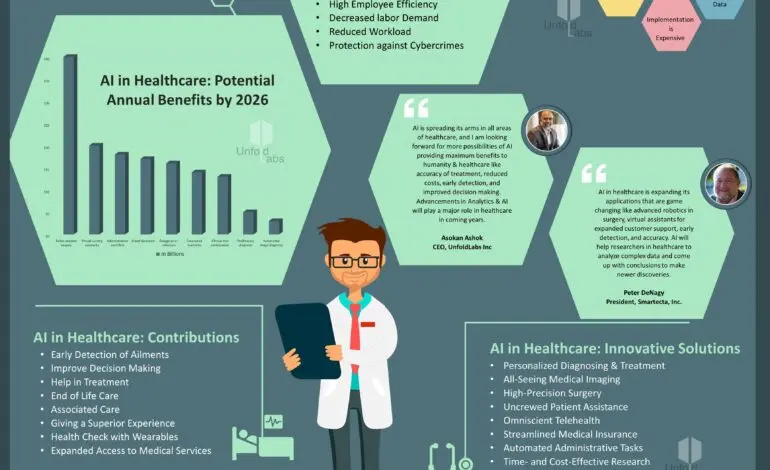
The integration of artificial intelligence (AI) in healthcare is becoming increasingly important as the industry seeks to improve patient outcomes and streamline operations. AI technologies are revolutionizing everything from diagnostics to personalized treatment plans, and their relevance is underscored by the growing demand for data-driven healthcare solutions amid rising costs.
Recent Developments in AI Technology
Recent advancements in AI have led to significant innovations in healthcare. Machine learning algorithms can now analyze medical imagery with remarkable accuracy, providing radiologists with essential support in diagnosing conditions like cancer, pneumonia, and fractures more quickly and with fewer errors. For instance, a 2023 study reported that AI systems could classify chest X-rays with over 90% accuracy, matching or even surpassing experienced radiologists.
Clinical Applications of AI
In addition to imaging, AI is enhancing patient management through predictive analytics. For example, AI can analyze historical patient data to forecast which individuals are at higher risk for chronic diseases, enabling healthcare providers to take preventive measures. Furthermore, chatbots and virtual assistants are being adopted to manage patient inquiries and provide basic support, allowing healthcare professionals to focus on more critical tasks.
Ethical Considerations and Challenges
Despite its promise, the use of AI in healthcare raises important ethical questions. Issues around data privacy, algorithmic bias, and patient consent must be addressed to ensure that AI technologies are implemented responsibly. Experts argue that while AI can significantly enhance healthcare delivery, careful guidelines and regulations are necessary to protect patients’ rights and maintain trust in medical professions.
Conclusion
Overall, the role of AI in healthcare continues to grow, offering numerous opportunities for improvement in patient care and operational efficiency. As healthcare organizations increasingly adopt these technologies, they must also commit to addressing the ethical implications and challenges that arise. The future of AI in healthcare holds great promise, with the potential to significantly reshape how healthcare is delivered, ultimately benefiting patients and providers alike.