White House defends Argentina team
The White House has defended the Argentinian football team’s right to free speech after players displayed a banner supporting their country’s territorial claim to the Falkland Islands. This occurred during celebrations following their World Cup semi-final victory against England. The incident has led to calls for FIFA to investigate.
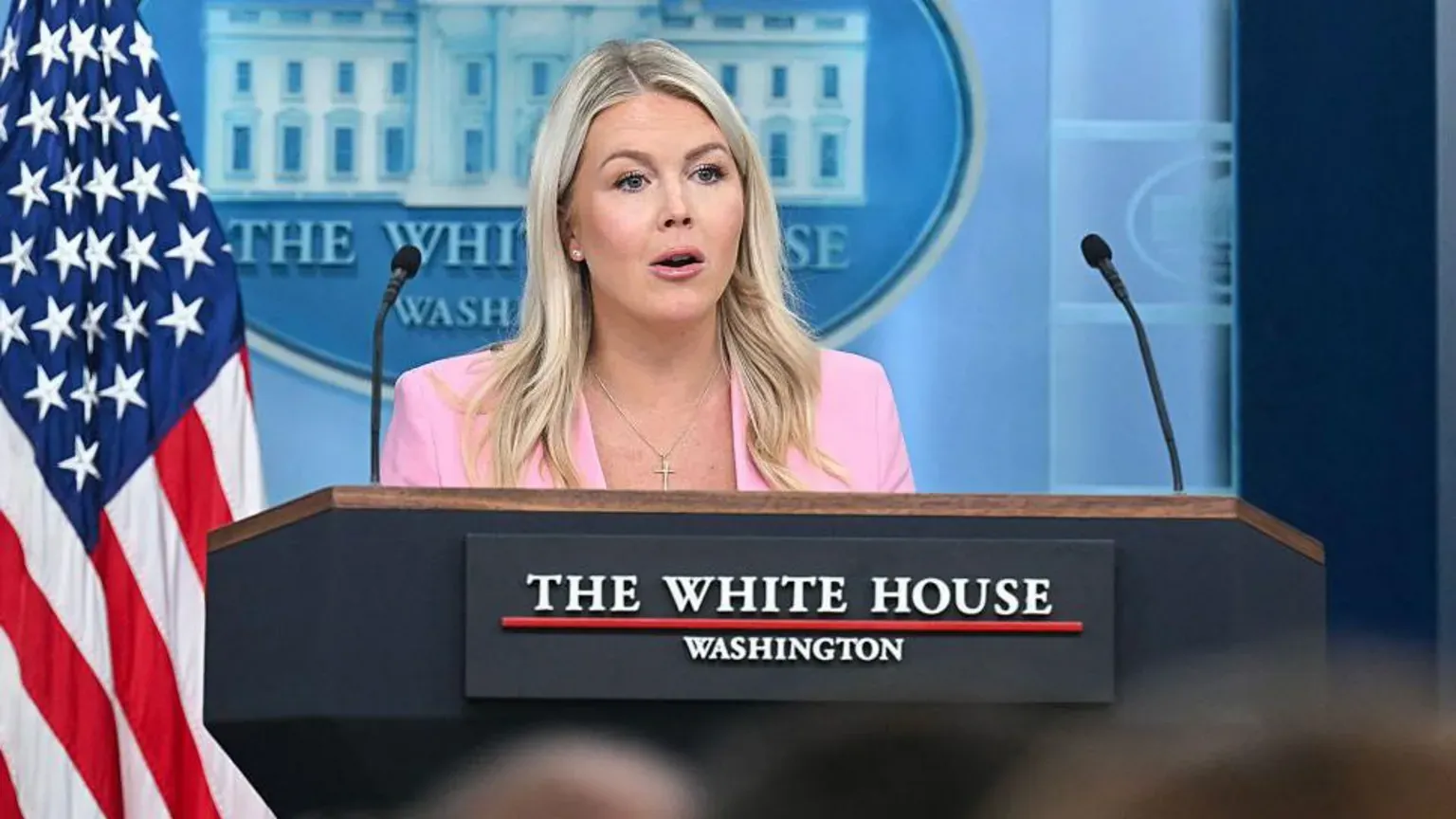
On Friday, a representative from the White House commented on the team’s actions, stating that the players had the opportunity to express their views in the United States. These remarks could intensify the ongoing discussion surrounding the incident, especially as Downing Street has supported calls for FIFA to look into the matter.
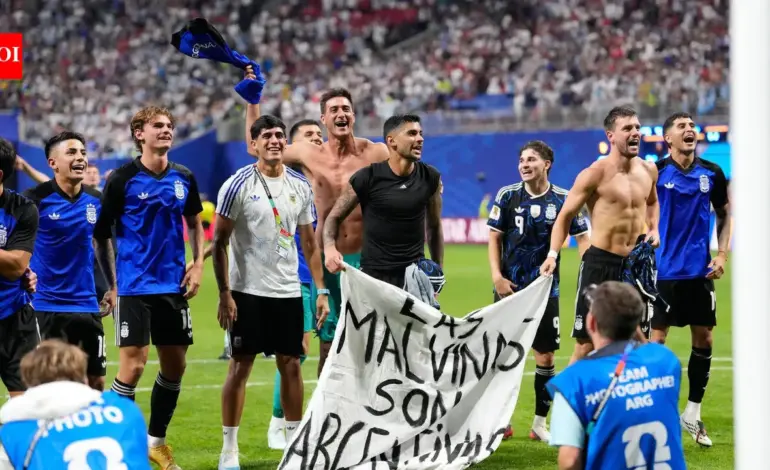
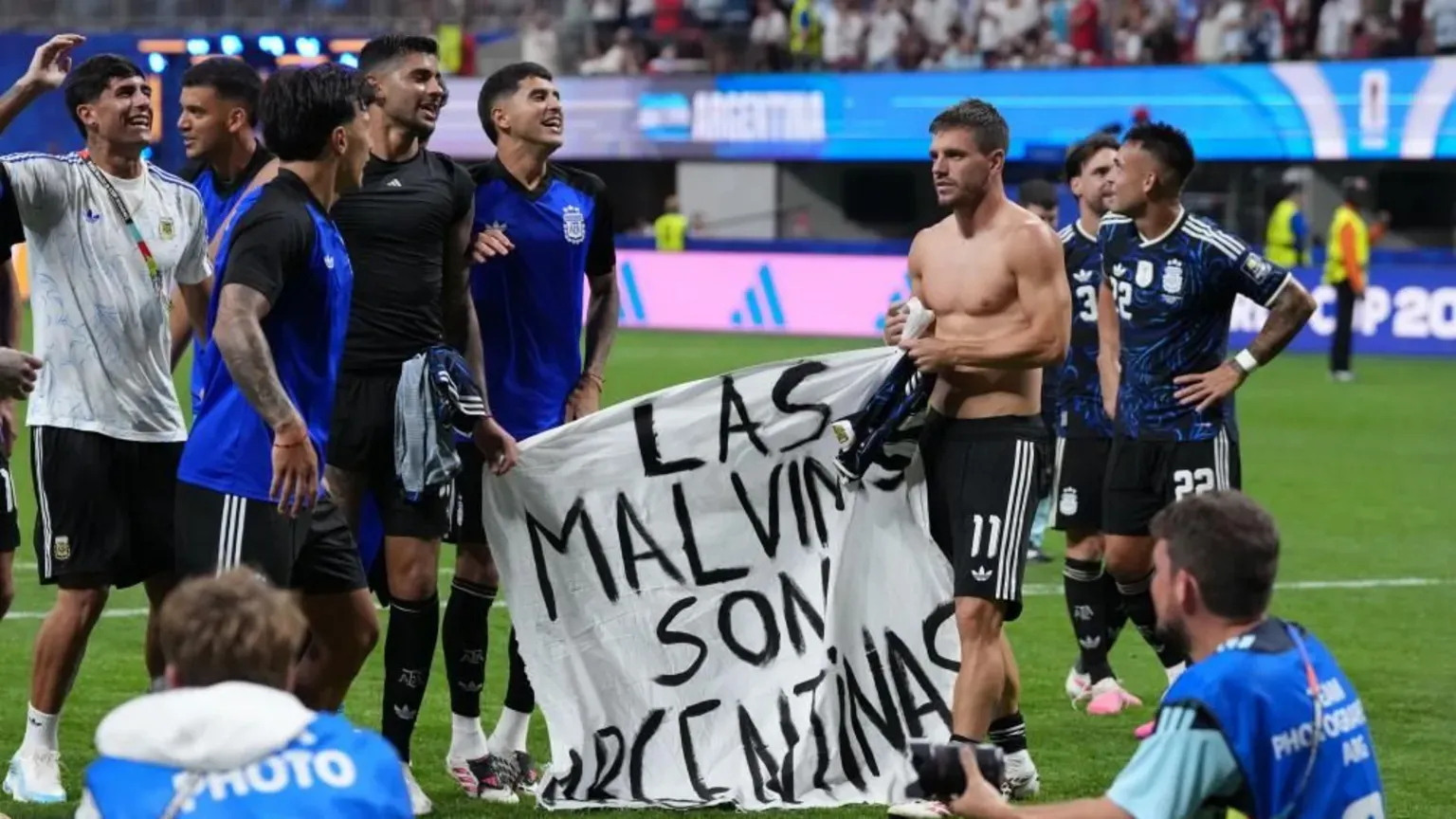
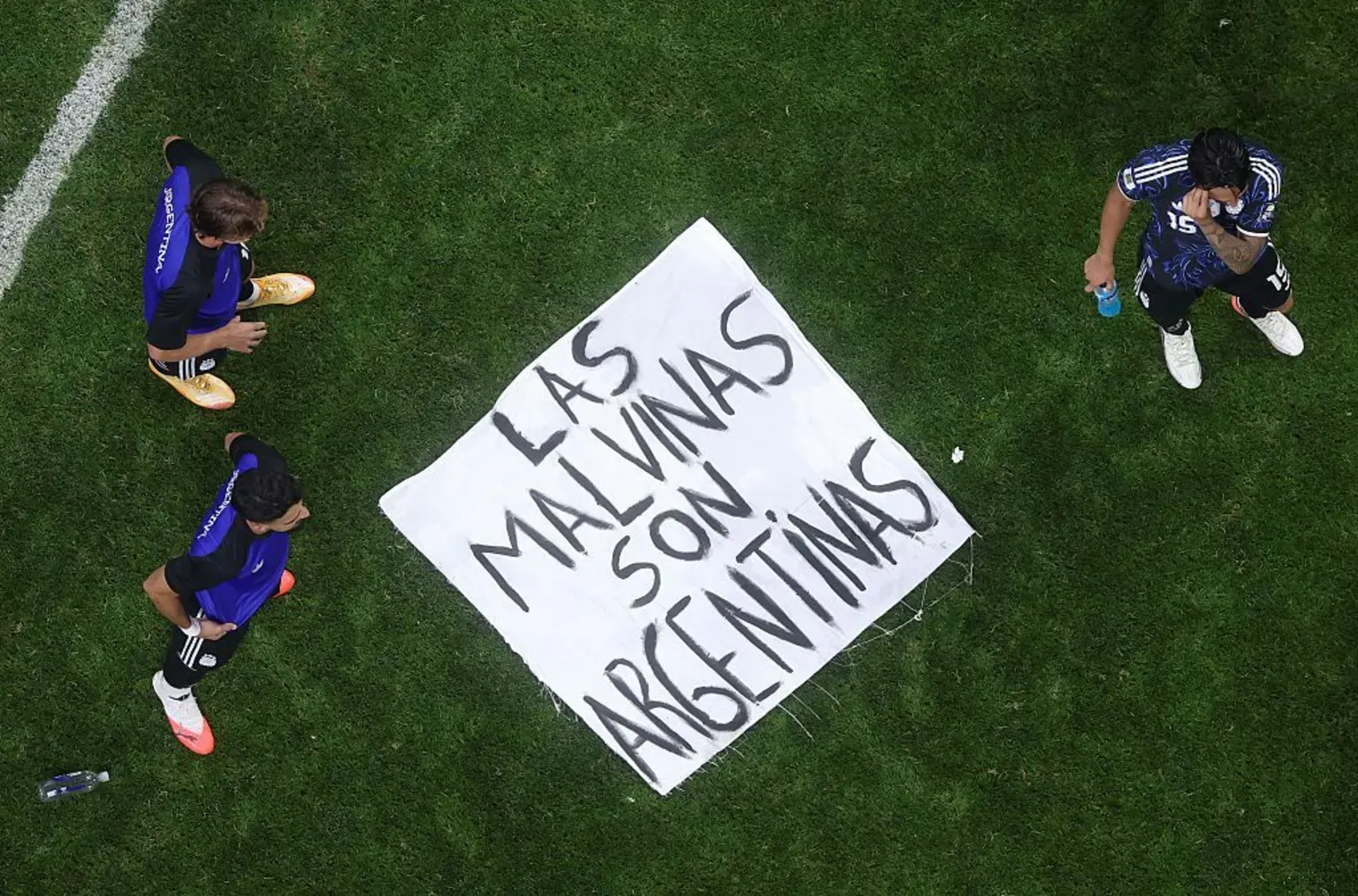
The Falklands, a British overseas territory in the south-west Atlantic Ocean, remain a point of contention regarding sovereignty between the UK and Argentina. After their semi-final match, Argentinian players held a banner that read, “Las Malvinas son Argentinas,” which translates to “The Falklands are Argentine.”
The White House representative referred to free speech protections in the US Constitution, noting, “We believe in our First Amendment rights here in the United States of America.”
Calls for FIFA investigation
Downing Street has endorsed calls for FIFA to investigate the incident. The prime minister’s official spokesperson stated, “The World Cup might not be ours, but the Falkland Islands definitely are. Our commitment to the Falklands will never waver.”
The UK government added that any potential action against the Argentinian players was “a matter for Fifa,” but echoed the sentiment that the world football’s governing body should investigate. The government of the Falkland Islands expressed disappointment but not surprise regarding the banner, hoping FIFA would “sanction all behaviour of this nature in line with its own rules.”
A statement from the Falkland Islands government also highlighted their desire to keep politics separate from sport and to avoid the islands and their people being used as a political tool in discussions between England and Argentina.
In 2013, the people of the Falkland Islands voted to remain a UK overseas territory. Out of 1,517 votes cast in a referendum, 1,513 were in favour of remaining a UK overseas territory, with only three votes against.
Argentina’s vice-president Victoria Villarruel posted on social media after the victory, stating that “it wasn’t just another match” and including a video appearing to show Argentinian soldiers. She also wrote, “The Falklands are Argentine. They banned bringing them to the stadium and forgot that we carry them in our blood and our hearts.”
Additionally, Argentinian players were observed singing chants referencing the Falklands, as well as Argentinian football legends Maradona and Lionel Messi, following their 3-2 win over Egypt in the last 16 stage of the tournament.
FIFA’s disciplinary review
Argentina’s place in the 2026 FIFA World Cup final has been overshadowed by a disciplinary controversy following the display of the politically charged banner. This incident occurred during on-field celebrations in Atlanta, after Argentina secured a late victory to reach a second consecutive World Cup final.
A group of players, including Lisandro Martínez, Cristian Romero, and Giovani Lo Celso, were reportedly involved in holding the banner. This has led to scrutiny under FIFA’s regulations, with the possibility of disciplinary action being formally considered.
FIFA has confirmed that its independent disciplinary committee is reviewing the incident as part of its standard procedures. The governing body stated that the committee is “assessing the match reports and considering the relevant circumstances before deciding on potential further steps based on the FIFA Disciplinary Code.”
The review specifically focuses on Article 34.3 of the 2026 FIFA World Cup Match Protocol, which prohibits players and team officials from displaying political, religious, or personal messages before, during, or after matches. The FIFA Disciplinary Code classifies the use of a sporting event for political or non-sporting demonstrations as a potential offense, with sanctions ranging from warnings and fines to sporting penalties.
Political figures in the UK have called for strong action. One political leader urged FIFA to suspend all players involved in displaying or surrounding the banner, referencing a previous UEFA decision to impose a one-match ban on Spain internationals after a similar incident. Another British minister described the gesture as “totally inappropriate” and emphasized that politics should be kept out of football, expecting FIFA to conduct a thorough investigation.
While disciplinary action is anticipated, reports from Spanish and Argentinian outlets suggest that sporting suspensions, particularly those affecting the World Cup final, are considered less likely. Instead, sanctions could take the form of warnings or financial penalties directed at the players or the Argentine Football Association (AFA).
Multiple reports indicate that any formal decision by FIFA’s disciplinary committee is unlikely to be issued until after the conclusion of the tournament. This timeline suggests that even if sanctions are imposed, they would not affect player availability for the final against Spain. FIFA has not publicly confirmed the timing of its decision, maintaining uncertainty until the disciplinary process is completed.
Previous cases offer some context. UEFA suspended players in 2024 for political gestures, while at the 2018 World Cup, players were fined rather than suspended for similar actions. A player received a suspension after displaying a political banner at the London Olympics. FIFA also sanctioned Argentina in 2014 for a Falklands-related banner after a friendly match, resulting in a financial penalty rather than sporting sanctions. These precedents suggest that while disciplinary action for political messaging is common, suspensions for major fixtures are typically reserved for more serious or repeated offenses.
The situation remains unresolved as Argentina prepares to face Spain in the World Cup final.
A brief but intense conflict occurred between Britain and Argentina over the territory in 1982, lasting 74 days.
During this conflict, a British military task force removed Argentinian forces who had landed on the Falklands to assert a territorial claim, resulting in the deaths of 255 British military personnel, three islanders, and 649 Argentinian soldiers.
Source: bbc.com