Who is the CM of Tamil Nadu in 2026?
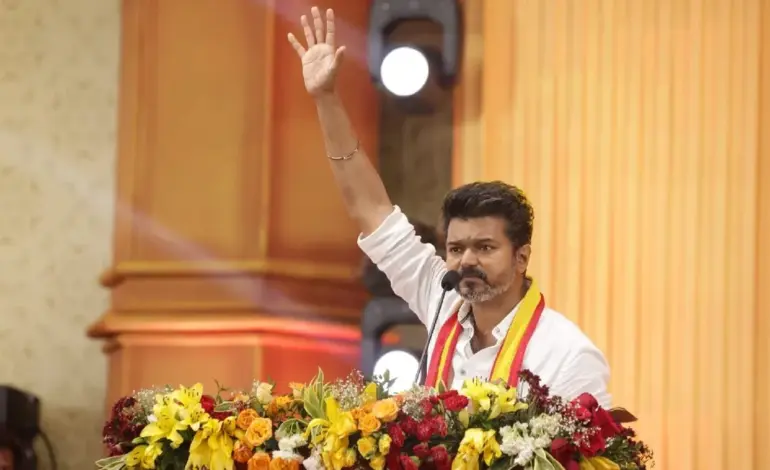
In a surprising turn of events, Vijay’s Tamilaga Vettri Kazhagam (TVK) emerged as the single largest party in the 2026 Tamil Nadu assembly elections, disrupting the traditional dominance of the Dravidian parties. The election results have sent shockwaves through the political landscape, particularly for MK Stalin and his ruling party, the Dravida Munnetra Kazhagam (DMK).
Before this election, expectations leaned heavily toward a continuation of DMK’s governance. MK Stalin’s administration had been seen as stable, with significant support from various constituencies. However, voter sentiment shifted dramatically during this electoral cycle.
TVK won 85 seats and led on an additional 22 seats, securing approximately 34.72% of the vote share — about 1.18 crore votes. In stark contrast, DMK could only manage 41 seats, with a vote share around 24%, equating to roughly 84 lakh votes. The All India Anna Dravida Munnetra Kazhagam (AIADMK) trailed behind with 32 seats.
The loss was particularly poignant for MK Stalin, who lost his own Kolathur constituency to TVK candidate V S Babu by around 8,700 votes. This defeat illustrates a significant shift in voter loyalty — a trend that experts suggest reflects broader dissatisfaction with traditional party politics.
Udhayanidhi Stalin acknowledged this outcome by stating, “The people of Tamil Nadu have delivered their verdict, and we humbly accept it.” His acknowledgment highlights an understanding that political landscapes can change rapidly.
Sivakarthikeyan offered congratulations to Vijay for his impactful debut, signaling a new era in Tamil Nadu politics. This victory not only disrupts established norms but also suggests that voters are seeking alternatives to longstanding political players.
This election can be viewed as a referendum on MK Stalin’s five years in power — a period marked by both achievements and growing discontent among certain voter segments. The implications for future governance are profound.
The results indicate that voters are ready for change — or at least willing to explore new political avenues. The challenge now lies ahead for TVK: Can they translate electoral success into effective governance?