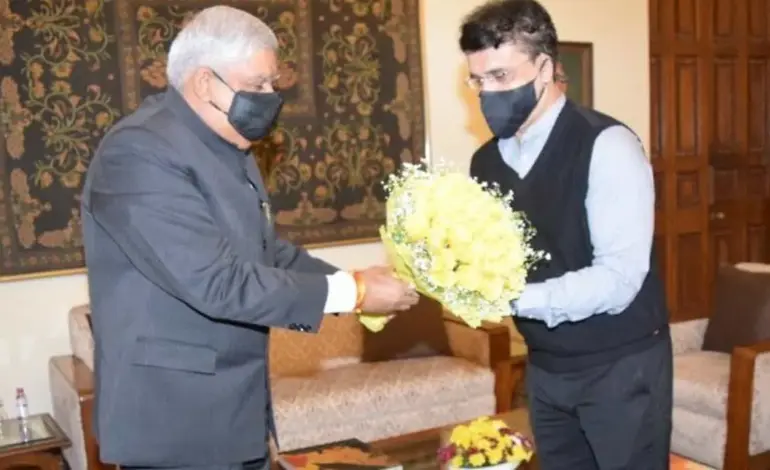
Sourav Ganguly, the former cricket captain and current influential figure in West Bengal, cast his vote in the second phase of the West Bengal Assembly elections on April 29, 2026. He emphasized the unpredictability of the electoral outcome, asserting that even esteemed personalities like ‘Mamata didi’, ‘Modij’, and Maa Durga cannot foresee what lies ahead.
Polling for the 294-member Assembly took place in two phases — on April 23 and April 29. As of 11 am on April 29, voter turnout reached 39.97%, a figure that reflects a significant engagement from approximately 3.21 crore eligible voters.
Key predictions from exit polls:
- The BJP is projected to secure around 192 seats (plus/minus 11), indicating a potential shift in power.
- The ruling TMC is forecasted to attain about 100 seats (plus/minus 11).
- These estimates suggest a competitive landscape, with high stakes for both parties.
Ganguly’s remarks encapsulate a broader sentiment among observers — this election is marked by uncertainty. Polling data offers insights but lacks definitive clarity. The main contest pits the Trinamool Congress (TMC) against the Bharatiya Janata Party (BJP), with both parties vying for dominance.
In his own words, “How can I answer such a question? Only on Monday, when the ballot box opens, will we all know the answer.” This statement underscores a common theme in political discourse: predictions are fraught with risk. The counting of votes is scheduled for May 4, 2026, which will ultimately reveal whether these forecasts hold true.
The electoral landscape in West Bengal has evolved significantly over recent years, with changing voter sentiments and party dynamics influencing outcomes. As we approach the final counting day, many questions linger about how these shifts will manifest in actual results.