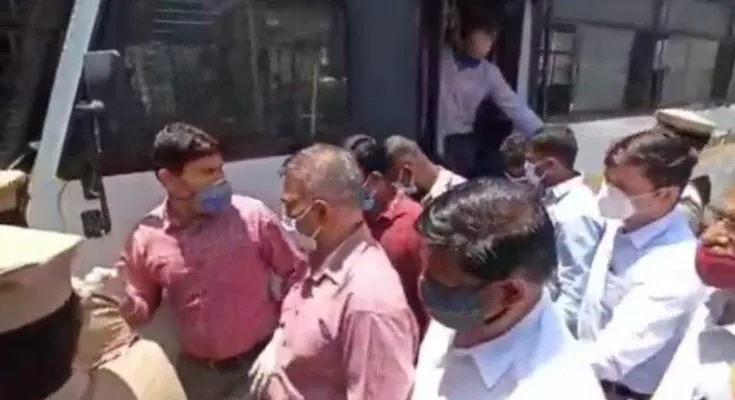
The Sathankulam case, which has been a focal point for discussions on police brutality in India, reached a pivotal moment on March 23, 2026. Prior to this judgement, expectations were mixed; many believed that the systemic issues surrounding police accountability would hinder justice for the victims, Jayaraj and Bennix, who died in police custody in June 2020.
However, the First Additional District and Sessions Court in Madurai delivered a decisive verdict, finding all nine police officers involved guilty of murder. This outcome is particularly striking given the lengthy six-year trial, which involved the examination of over 100 witnesses and highlighted the gruesome details of the custodial violence inflicted on the victims.
Before the judgement, the case had already garnered significant attention, leading to widespread protests against police brutality. The deaths of Jayaraj and Bennix, who were tortured for allegedly violating COVID-19 norms, sparked outrage and calls for accountability within the police force.
Judge G Muthukumaran stated, “The injuries inflicted on Jayaraj and Bennix were unnatural, which ultimately caused their death,” underscoring the court’s rejection of the defense’s argument that the injuries were self-inflicted. This statement not only reinforces the court’s stance but also reflects a growing recognition of the need for justice in cases of custodial deaths.
The immediate effects of this ruling are profound. The guilty verdicts serve as a warning to law enforcement agencies about the consequences of misconduct. The sentencing for the officers is scheduled for March 30, 2026, which will further clarify the repercussions of their actions.
Moreover, this case has prompted discussions among legal experts and human rights advocates regarding the broader implications for police accountability in India. The Madurai bench of the Madras High Court had previously taken suo motu cognizance of the case, leading to a judicial inquiry and the eventual transfer of the investigation to the Central Bureau of Investigation (CBI) at the request of the Director General of Police.
As the trial unfolded, it became evident that the systemic issues within the police force needed addressing. The case has drawn attention not only to the specific actions of the Sathankulam police but also to the culture of impunity that often shields law enforcement from accountability.
In light of this judgement, experts argue that it could serve as a catalyst for reform within the police system. The phrase “Justice delayed is justice denied and justice hurried is justice buried,” attributed to the High Court, resonates deeply in this context, emphasizing the need for timely and fair judicial processes.
As the nation awaits the sentencing, the Sathankulam case stands as a crucial moment in the ongoing struggle for justice and accountability in India, reflecting a growing demand for change in how custodial violence is addressed.