The Role of AI in Healthcare: Current Trends and Future Prospects
Introduction
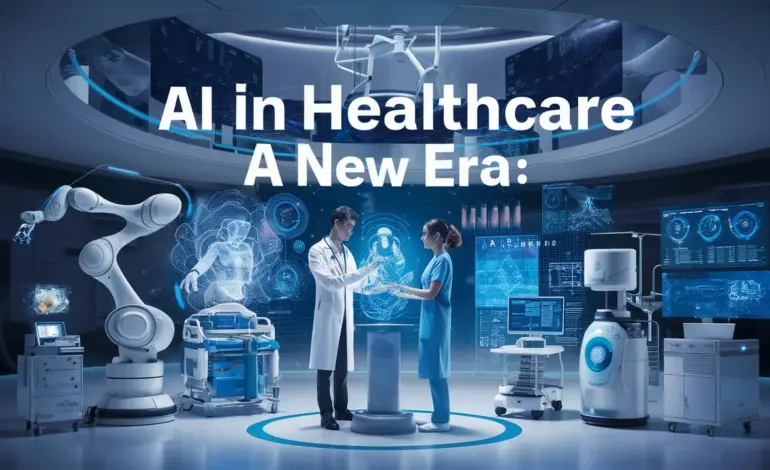
The integration of artificial intelligence (AI) in healthcare is no longer a futuristic concept, but a present-day reality that is transforming the medical landscape. Recent advancements have demonstrated AI’s ability to enhance diagnostics, streamline operations, and improve patient outcomes. With the COVID-19 pandemic accelerating the adoption of technology in healthcare, understanding AI’s role is paramount for healthcare professionals and patients alike.
Current Applications of AI in Healthcare
AI’s impact on healthcare spans various sectors, including diagnostics, personalized medicine, and operational efficiency. For instance, AI algorithms are now being used to analyze medical imaging, such as X-rays and MRIs, with remarkable accuracy. A study published in ‘Nature’ revealed that AI outperformed radiologists in identifying breast cancer in mammograms.
In addition to diagnostics, AI has made strides in personalized treatment plans. Machine learning models can analyze patient data, genetic information, and treatment outcomes to recommend tailored therapies. This approach not only maximizes efficacy but also minimizes adverse effects, making treatments safer and more effective.
Moreover, AI is enhancing operational efficiency through predictive analytics. Hospitals are employing AI to forecast patient admissions, optimize staffing, and manage resources better. This application mitigates bottlenecks and reduces wait times, ultimately improving the patient experience.
Challenges and Ethical Considerations
Despite its benefits, the integration of AI in healthcare is not without challenges. Data privacy and security remain a primary concern, as sensitive patient information must be protected against breaches. Furthermore, there is an ongoing debate about the ethics of AI decision-making in critical healthcare scenarios, where human intuition has traditionally played a vital role.
Conclusion
The future of AI in healthcare holds immense potential, with ongoing research and innovations poised to change how medical professionals deliver care. As technology continues to evolve, it is crucial for stakeholders to address challenges, ensuring that AI is implemented responsibly and effectively. For patients, the continuous improvement in AI applications means a better quality of care and enhanced health outcomes. As AI becomes more integrated into healthcare systems, its significance will likely grow, shaping the future of medical practice for the better.