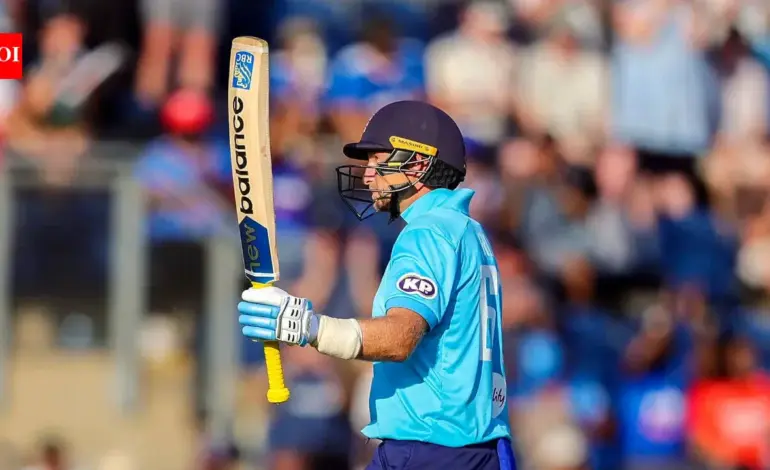
Root’s pivotal innings and England’s ODI challenges
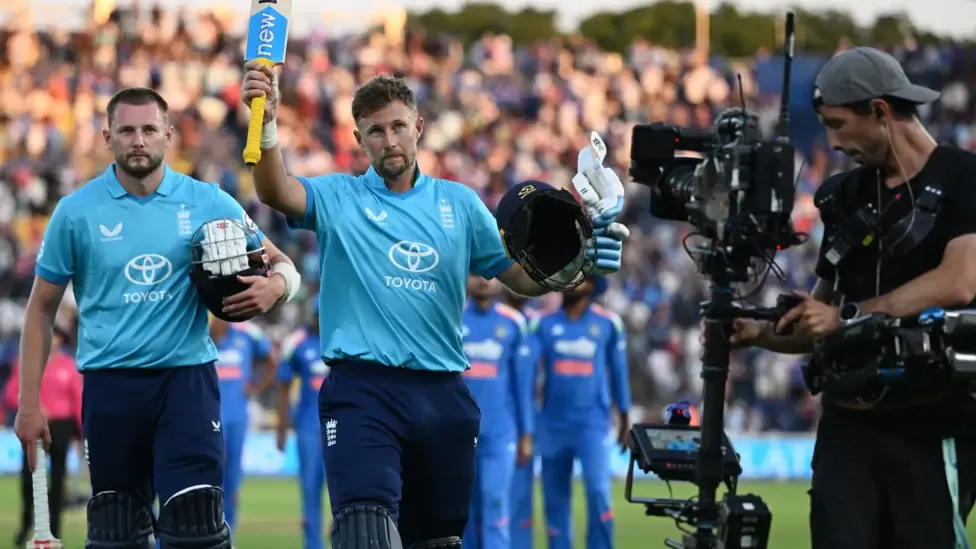
Joe Root delivered a crucial performance for England in the second One-Day International against India in Cardiff, scoring an unbeaten 99 runs. His innings was instrumental in securing a four-wicket victory for England, leveling the series at 1-1. Root’s knock, achieved in challenging conditions, showcased strike rotation and precise shot-making, contrasting with some of the more aggressive batting styles seen in recent years.
The veteran batter emphasized the need for adaptability in different match scenarios. He highlighted the importance of absorbing pressure and having a diverse range of approaches to batting, noting that while some pitches might favor high-scoring games, others demand a more resilient and strategic approach. This adaptability, he believes, is key to becoming a more complete player.
Despite his individual brilliance, Root was left stranded on 99 not out, becoming the first England batter in ODI history to remain unbeaten on this score. This occurred as Gus Atkinson, with a quickfire 23 not out, helped secure the winning runs in the 45th over, completing the chase of 234. Root’s innings included eight boundaries and came off 133 balls.
Learning on the job: A team in transition
Joe Root, at 35, commented on the challenges faced by younger players in the England ODI squad, stating they are often compelled to “learn on the job” due to limited exposure to the 50-over format. This situation arises partly because the One-Day Cup in domestic cricket now coincides with The Hundred, leading to it becoming more of a developmental competition.
The disparity in experience is notable; England’s top six batters in a recent match had collectively played over 400 fewer List A matches than their India counterparts. Root explained that this lack of prior grounding in 50-over cricket means new players entering the national team do not possess the extensive experience and understanding of the format that might be found in other cricketing nations.
Root acknowledged that this scenario means players must learn quickly under pressure. He hopes the team will be judged on its current performances and its ability to adapt, citing a recent series win against Sri Lanka where the team learned from an initial defeat to secure the series. He also mentioned that the team struggled to assess the conditions quickly in the first match of the current series but adapted in the second.
The England team has experienced inconsistency in ODIs, with a defeat in the series opener marking their 14th loss in 20 matches. Currently ranked eighth globally, they need to maintain a position within the top nine to ensure automatic qualification for the next World Cup in 2027. The team’s top order has also been searching for a consistent opening partner for Ben Duckett, with Jacob Bethell, who has played 23 ODIs, scoring 14 and four in his new role.
Looking ahead to the series decider
The series is now poised for a decisive third match at Lord’s on Sunday. Root and former captain Jos Buttler are the only remaining batters from England’s 2019 World Cup-winning squad, with 191 and 201 ODI caps respectively. Despite the team’s current transitional phase, Root expressed optimism that this new group can replicate the success of the 2019 team.
He highlighted the significance of the upcoming high-pressure game before a World Cup, noting that continuing to develop and understand various match situations will place them in a strong position for the tournament. Root recalled that the build-up to the 2019 success involved a consistent group of 15-16 players playing together regularly, a dynamic he believes the current squad can still achieve.
The victory in Cardiff, achieved in conditions that did not necessarily suit some of the players’ usual styles, was seen as a significant step forward for the team against the world’s top-ranked side. The focus now shifts to the final match at Lord’s, where England will aim to secure a series victory.
Shubman Gill, an India player, acknowledged Joe Root’s mastery in handling such totals, while Harry Brook praised Root as a phenomenal player who consistently performs when needed, highlighting his skill in strike rotation, a crucial aspect of 50-over cricket. Root himself stated that winning the series was more important than achieving a personal century, especially given the difficult batting conditions.
The second ODI saw England successfully chase down India’s target of 234. Root’s innings was a cornerstone, including a vital 72-run partnership with Will Jacks. The match concluded with England at 235 for 6 in 44.1 overs.
Source: bbc.com