Discussions on World Cup Expansion
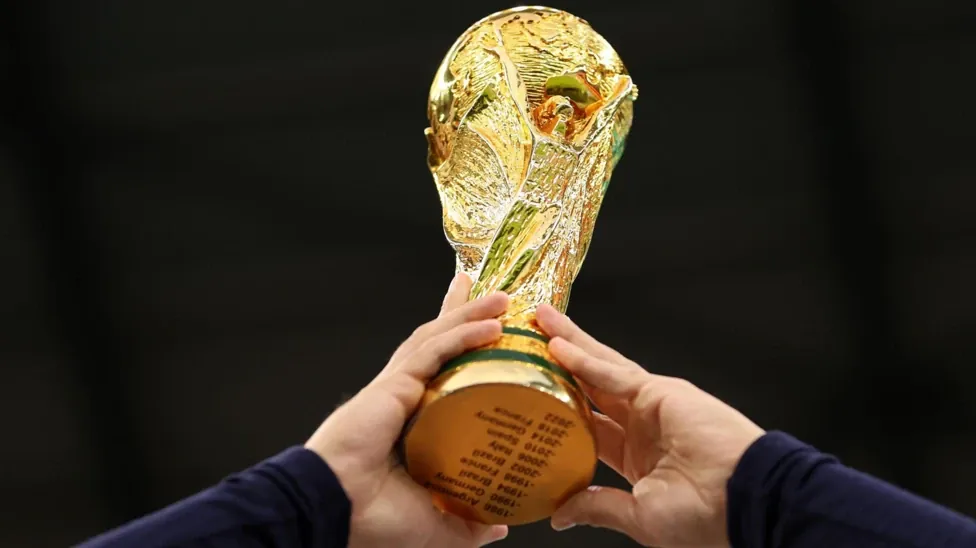
FIFA President Gianni Infantino has indicated that plans for a 64-team men’s World Cup will be assessed following the conclusion of the 2026 tournament. The proposal suggests expanding the competition by an additional 16 nations, building on the success of the current 48-team format. Infantino emphasised that the tournament should be inclusive, stating it needs to be “for the whole world” and not solely focused on Europe and South America.
The idea for an expanded tournament was initially put forward last year, and Infantino noted that the positive reception of the 48-team World Cup, which saw nine out of 10 African teams progress to the knockout stages, supports further consideration of a larger format. He highlighted the increasing quality of teams globally and the importance of providing smaller countries with the opportunity to participate, fostering incentive for continuous improvement.
The FIFA council had previously approved the expansion of the World Cup from 32 to 48 teams in 2017, with this change taking effect from the 2026 finals. Speculation about further expansion has persisted since then. A formal proposal to increase the 2030 World Cup to 64 teams was submitted by the South American governing body, Conmebol, in April 2025, though no final decision has been reached.

Challenges and Support for a Larger Tournament
Expanding the World Cup to 64 teams would present significant logistical challenges for host nations. The 2026 tournament will be co-hosted by the United States, Canada, and Mexico. The 2030 edition is planned to be primarily hosted by Spain, Portugal, and Morocco, with three opening matches scheduled in Argentina, Uruguay, and Paraguay to commemorate the competition’s centenary. Uruguay hosted the inaugural World Cup in 1930.
The prospect of a 64-team tournament has met with mixed reactions. UEFA president Aleksander Ceferin has voiced opposition, describing the proposal as a “bad idea” that could negatively impact both the tournament itself and the qualification process. Similarly, Asian Football Confederation (AFC) president Sheikh Salman bin Ibrahim Al Khalifa suggested that further expansion could lead to “chaos.” Victor Montagliani, president of Concacaf, also expressed concerns, believing such an expansion might harm the broader football ecosystem.
Conversely, Andrew Giuliani, executive director of the White House’s World Cup task force, indicated that the United States might consider bidding to host the 2038 World Cup and would be capable of managing a 64-team format. From FIFA‘s perspective, expansion is seen as a way to allow more countries to participate, potentially including almost a third of the 211 FIFA-affiliated countries, and could also generate increased revenue for member associations.
Future Considerations and Impact
The official position of FIFA is to discuss expansion ideas with stakeholders and to consider all proposals from council members. The ultimate decision rests with the FIFA council, although there are currently no indications that an immediate expansion to 64 teams is expected. The discussion around a larger format will continue in relevant committees after the current World Cup.
The 2030 tournament is set to be spread across six nations and three continents, with Uruguay, Argentina, and Paraguay hosting one match each to begin the competition. The remaining 101 games for a 48-team tournament would be divided among Morocco, Portugal, and Spain. The idea of a 64-team tournament was first formally proposed by Uruguayan football official Ignacio Alonso at a FIFA Council meeting in March 2025.
Alejandro Dominguez, president of Conmebol and a FIFA vice-president, described a 64-team tournament in 2030 as his “dream,” believing it could “unite the world, just once.” However, hosting stipulations mean that South America would be restricted from hosting duties until at least 2042 after the 2030 tournament, as a continent can only stage the World Cup once every three editions.

The FIFA council approved the expansion of the World Cup from 32 to 48 teams in 2017.
Source: bbc.com