Carl Pei Predicts the End of Apps in AI-Driven Smartphones
What observers say
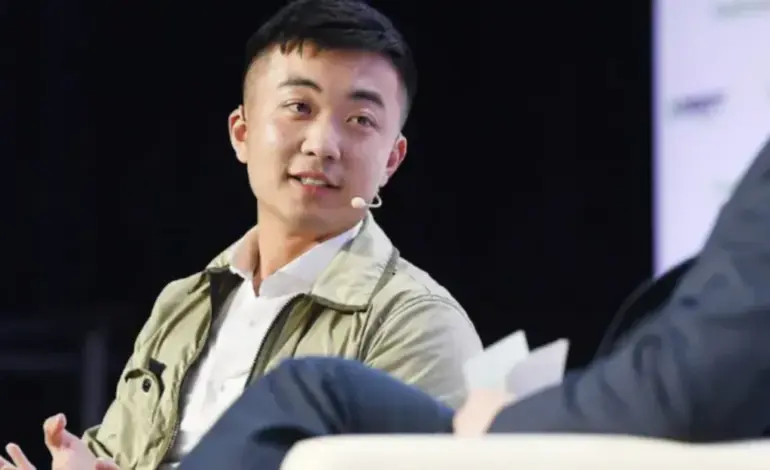
“In terms of AI in software, I think people should understand that apps are going to disappear,” stated Carl Pei, co-founder of Nothing, during a panel discussion at the SXSW conference in Austin. This bold assertion encapsulates Pei’s vision for the future of smartphones, where traditional applications may become obsolete as artificial intelligence reshapes user interaction.
Pei’s comments come at a time when the smartphone experience has stagnated, with the same elements dominating the landscape for nearly two decades. He believes that the current app ecosystem may not survive the transition to AI-first computing, as AI systems evolve to understand user intent more intuitively. “It’s very hard to get things done on a phone,” Pei lamented, highlighting the inefficiencies that have persisted in mobile technology.
The implications of Pei’s vision are significant. He argues that as AI agents become more sophisticated, they will simplify the process of completing tasks on smartphones. Instead of navigating through various apps, users could rely on AI to anticipate their needs and execute actions seamlessly. “I know you very well, and if I know your intention, I just do it for you,” he elaborated, suggesting a future where user experience is streamlined and personalized.
Nothing, the company Pei co-founded, has recently raised around 200 million dollars in Series C funding, achieving a valuation of 1.3 billion dollars. This financial backing underscores the confidence investors have in Pei’s vision and the potential for innovation in the smartphone market. The company is already experimenting with its operating system, which allows users to vibe code their own mini apps, hinting at a shift towards more customizable and AI-driven user experiences.
However, Pei also issued a warning to startups that continue to rely on traditional apps as their core value proposition. He cautioned that these companies may face disruption as the landscape evolves. The rapid advancement of AI technology could render conventional app-based models obsolete, forcing businesses to rethink their strategies and adapt to a new paradigm.
As the conversation around AI and smartphones continues to unfold, Pei’s insights challenge the status quo and provoke thought about the future of mobile technology. The potential for AI to redefine how users interact with their devices is immense, yet it raises questions about the sustainability of the current app ecosystem.
With the SXSW conference serving as a backdrop for these discussions, the tech community is left to ponder the implications of Pei’s predictions. As AI continues to advance, the next few years could witness a significant transformation in how smartphones operate, potentially leading to a landscape where apps are no longer a necessity.