Metro: A Shift in Urban Commuting Culture
Who is involved
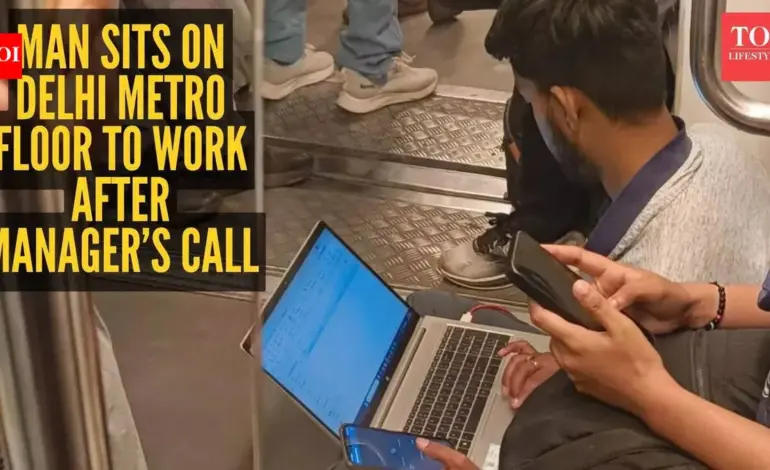
The metro systems in India have long been a vital part of urban commuting, with the Delhi Metro being one of the largest and most advanced networks in the world. Prior to recent developments, the expectation was that these systems would continue to grow steadily, accommodating the increasing urban population and offering a reliable means of transport. However, a recent incident involving a man working on the floor of a crowded Delhi Metro coach has sparked a broader conversation about work culture and the pressures faced by commuters.
This photo, which went viral on social media, depicted the man answering a call from his manager while sitting on the floor of the metro, raising questions about the lengths to which employees go to meet work demands. This decisive moment has highlighted the intersection of work and daily commuting, particularly in a city where the Delhi Metro handled an impressive 235.8 crore passenger journeys in 2025, with an average daily ridership of 64.6 lakh passengers.
In contrast, the Pune Metro, which currently operates across a 33-kilometre stretch, is also expanding its network to nearly 200 kilometres. With nearly 25,000 passengers using the Pune Metro daily, the system is becoming increasingly important for the region’s mobility. The Hinjewadi metro line in Pune is expected to begin operations in May 2026, further enhancing connectivity in the area.
The direct effects of these developments are significant for both cities. In Delhi, the viral photo has prompted discussions about the pressures of modern work culture, with some commentators noting, “This is dedication at another level. Respect,” while others have criticized the situation as emblematic of a toxic work environment. The sentiment that “no job should make you sit on the floor in a crowded metro and work” resonates with many commuters who face similar challenges.
In Pune, the expansion of the metro network is seen as a crucial step towards improving mobility in a rapidly growing urban area. As Maharashtra’s Devendra Fadnavis noted, “Maharashtra is the first state to formulate GCC (Global Capability Centres) policy and in such a situation mobility is very important.” This highlights the necessity of efficient transport systems to support economic growth and urban development.
As the Delhi-NCR metro network expands to about 416 kilometres with 303 stations, it continues to set a benchmark for urban transit systems. The integration of technology, including the operation of one of the largest driverless metro networks in the world, reflects a commitment to modernizing public transport. This shift not only enhances the commuting experience but also addresses the challenges posed by increasing urbanization.
Both metro systems are at a crossroads, with the potential to reshape the commuting landscape in their respective cities. The ongoing developments in Delhi and Pune serve as a reminder of the importance of adapting to the needs of commuters while addressing the cultural implications of work and mobility. As these systems evolve, they will undoubtedly influence the daily lives of millions, highlighting the need for a balance between work commitments and personal well-being.
Details remain unconfirmed regarding the full impact of these changes, but the conversation surrounding work culture and urban mobility is likely to continue as both cities navigate their future.