Iran israel us war live
Breaking Development
On March 11, 2026, the ongoing conflict between Iran, Israel, and the United States has reached a critical juncture as Iran’s President Masoud Pezeshkian outlined three conditions to end the war. The war, which began on February 28, 2026, following the assassination of Iran’s Supreme Leader and several top officials, has already resulted in significant civilian casualties and destruction of infrastructure in Iran.
Immediate Circumstances
In a statement, Pezeshkian emphasized that the only way to conclude the hostilities is through the recognition of Iran’s legitimate rights, payment of reparations for the damages incurred, and firm international guarantees against future aggression. He stated, “The only way to end this war — ignited by the Zionist regime and U.S. — is recognising Iran’s legitimate rights, payment of reparations, and firm international guarantees against future aggression.” As of now, the conflict has persisted for 12 days, with Iran’s military officials warning that any attack on its ports could trigger a wider regional response.
The escalation of this conflict has significantly affected global shipping routes and energy markets, with Brent crude prices soaring to $100 per barrel due to the instability in the region. Israeli officials have expressed skepticism regarding the potential for the war to lead to the collapse of Iran’s political system, despite the ongoing military pressure. Meanwhile, Iran’s economy continues to deteriorate under the weight of the conflict and ongoing international sanctions.
Iran’s military spokesperson, Abolfazl Shekarchi, warned, “If our ports and docks are threatened, all ports and docks in the region will be our legitimate targets.” This statement underscores the potential for the conflict to escalate further, impacting not only the immediate region but also global trade and security. Additionally, Iranian parliamentary speaker Mohammad-Bagher Ghalibaf stated, “The aggressor must be punished and taught a lesson that will deter them from attacking Iran again,” reflecting the heightened tensions and resolve from Iranian leadership.
Casualties and Infrastructure Damage
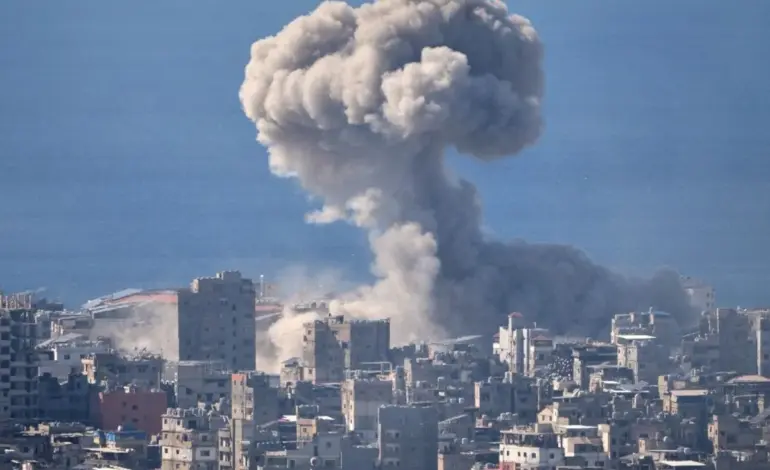
The ongoing war has led to a significant humanitarian crisis, with reports of civilian casualties rising daily. The destruction of critical infrastructure in Iran has exacerbated the situation, leading to calls for international intervention and support. As the conflict drags on, the Iranian government maintains that it remains open to peace talks but insists that the damage caused by the conflict must be addressed first.
International Implications
The ramifications of the Iran-Israel-US war extend beyond the immediate conflict, affecting geopolitical dynamics in the Middle East and beyond. The involvement of major powers like Russia and Pakistan in the region adds another layer of complexity to the situation. As tensions rise, the international community watches closely, with many fearing a broader regional conflict could ensue if diplomatic solutions are not pursued.
Looking Ahead
As the situation develops, the world awaits further updates on the Iran-Israel-US war. Details remain unconfirmed regarding potential peace negotiations or further military actions. The coming days will be crucial in determining the trajectory of this conflict and its impact on regional and global stability.