The Importance of Weather Maps in Climate Understanding
Introduction to Weather Maps
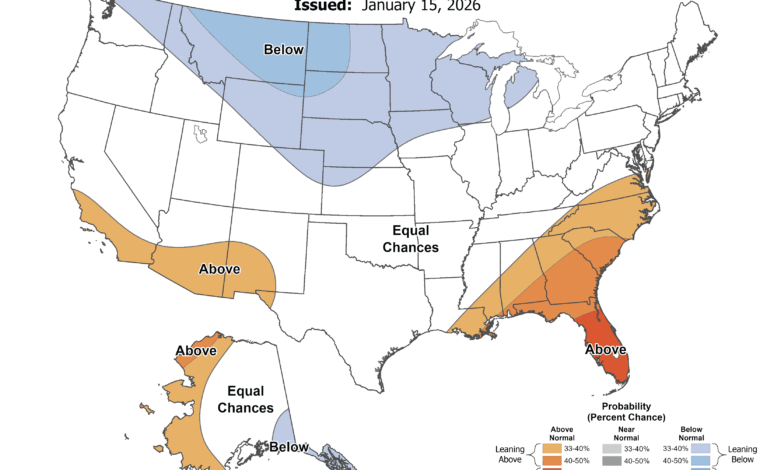
Weather maps are essential tools in meteorology, illustrating atmospheric conditions across geographical areas. These visual representations play a crucial role in weather forecasting, disaster preparedness, and understanding climate trends. As extreme weather events become increasingly common due to climate change, the significance of accurately interpreting weather maps has never been more vital.
Components of Weather Maps
Weather maps utilize various symbols and color codes to convey information about temperature, precipitation, wind speed, and direction. Common elements include:
- Isobars: Lines connecting points of equal atmospheric pressure, helping to identify high and low-pressure systems.
- Fronts: Indicators of changes in weather, typically shown as blue or red lines; cold fronts are depicted in blue, while warm fronts are represented in red.
- Precipitation: Areas of rain, snow, or other forms of precipitation are often indicated with shaded colors on the map.
Recent Advancements in Weather Mapping
Advancements in technology have significantly enhanced the accuracy and accessibility of weather maps. The integration of satellite imagery, Doppler radar, and artificial intelligence has allowed for more precise predictions. For instance, meteorological organizations utilize real-time data to update weather maps promptly, providing communities with timely information about approaching storms or heat waves.
The Role of Weather Maps in Disaster Preparedness
In light of recent severe weather events, such as hurricanes and wildfires, understanding and interpreting weather maps has become increasingly crucial for public safety. Local governments and emergency services rely on these maps to issue warnings and prepare communities for potential disasters. By comprehensively understanding weather patterns, residents can make informed decisions regarding evacuation and safety measures.
Conclusion: The Future of Weather Mapping
As climate change continues to alter weather patterns, the accuracy and reliability of weather maps will only become more important. Innovations in data collection and processing are paving the way for future developments in meteorology. By keeping abreast of these tools, individuals can better prepare for and respond to weather-related events, ensuring their safety and that of their communities. Understanding weather maps is not just for meteorologists; it is a valuable skill for everyone in an increasingly unpredictable climate.