What to Know About the Solar Eclipse 2026
Introduction
The solar eclipse of 2026 is poised to be one of the most significant astronomical events of the year, capturing the attention of skywatchers around the world. Occurring on August 12, 2026, this total solar eclipse will be visible along a narrow path across parts of the northern hemisphere, including regions in Spain, Greenland, Iceland, and parts of eastern Canada. As interest in celestial events grows, understanding what a solar eclipse entails and how to safely observe it is of utmost importance.
The Path of Totality
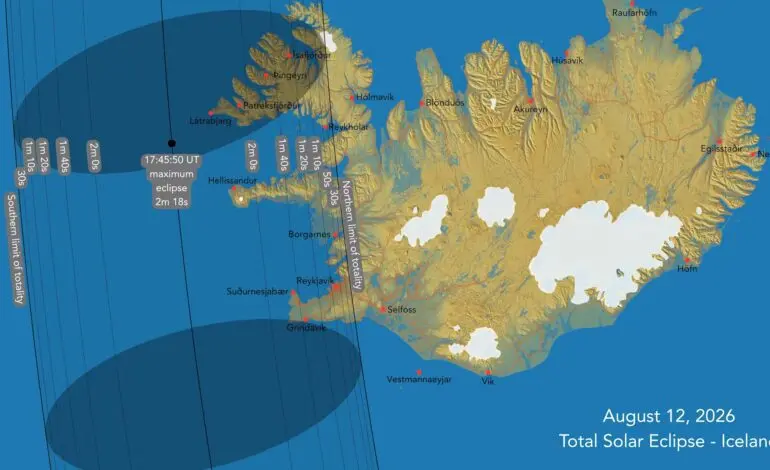
The path of totality is the area where observers can experience a total solar eclipse, where the moon completely obscures the sun. For the 2026 eclipse, the path will start in the Atlantic Ocean and will sweep over parts of Greenland and northern Iceland before making its way to mainland Spain. Spanish cities such as Badajoz, Seville, and the popular tourist destination of Madrid are all within the totality zone, making them prime locations for viewing.
Viewing the Eclipse
Viewing a solar eclipse requires caution, as looking directly at the sun can cause severe eye damage. It is crucial for observers to use proper eclipse glasses that meet the ISO 12312-2 international safety standard. Observers outside of the path of totality can still see a partial eclipse, where the moon covers only a part of the sun.
Significance of the Solar Eclipse 2026
Solar eclipses are significant not just for their beauty but also for their educational value. They provide opportunities for scientific research, particularly in fields like astronomy and atmospheric science. Eclipses can also draw significant tourism, as people travel from afar to witness this rare phenomenon. In 2026, cities located in the path of totality are expected to experience an increase in visitors, benefiting local economies and encouraging interest in science and astronomy.
Conclusion
The solar eclipse of 2026 presents a unique chance for individuals around the world to engage with an awe-inspiring natural event. As excitement builds, preparations for viewing safely and enjoyably will take center stage. This celestial event not only prompts curiosity and wonder but also serves as a reminder of the incredible dynamics of our solar system. Whether you are a seasoned eclipse chaser or experiencing your first, the solar eclipse in 2026 promises to be an unforgettable sight. Make sure to mark your calendars and prepare to witness a moment that bridges science, art, and community.