Significance of the ULA Vulcan Rocket Launch
Introduction
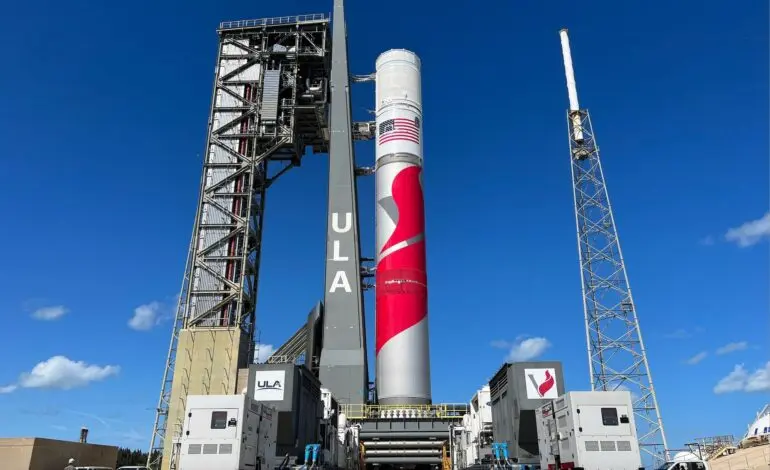
The upcoming ULA Vulcan rocket launch is a pivotal moment in the world of aerospace and space exploration. As the United Launch Alliance (ULA) seeks to enhance its capability in launching payloads into orbit, the Vulcan rocket appears to be a cornerstone of this strategy. This new rocket aims to revolutionize satellite delivery missions, making them more cost-effective and reliable, thus attracting more commercial and governmental clients.
Main Highlights of the Vulcan Rocket Launch
The Vulcan Centaur rocket is designed to replace ULA’s aging Atlas V and Delta IV vehicles, which have been the mainstay of ULA’s launch services. With a payload capacity of up to 27,000 pounds to geostationary transfer orbit (GTO), the Vulcan is engineered for efficiency, utilizing innovative technologies such as 3D-printed components and a modular design for future expansion.
Most recently, the ULA conducted successful static fire tests for the Vulcan rocket, confirming its advanced propulsion systems. This is a significant step towards the first orbital flight scheduled for early 2024, where the rocket will launch NASA’s Peregrine Lunar Lander, among other missions.
Capacity and Technological Innovations
The Vulcan is set to operate using two main engines—BE-4 engines developed by Blue Origin, which offer improved performance over previous models. This advancement could provide ULA with a competitive edge in the commercial launch market, especially as companies like SpaceX and Rocket Lab also expand their capabilities.
Another exciting initiative with the Vulcan rocket is ULA’s partnership with Amazon’s Project Kuiper, signaling a push into satellite internet service. The Vulcan will perform multiple launches to deploy these satellites, rescaling ULA’s role within an increasingly crowded space.
Conclusion and Future Outlook
The ULA Vulcan rocket launch is significant not only for ULA but for the broader aerospace sector. With its advanced technologies and capabilities, the Vulcan rocket is set to bolster U.S. leadership in satellite services and space exploration. As the launch window approaches, stakeholders from various sectors will be watching closely, anticipating the impact this could have on future missions and commercial spaceflight. The success of the Vulcan could pave the way for more ambitious projects in space, pushing the boundaries of what’s possible in the universe.